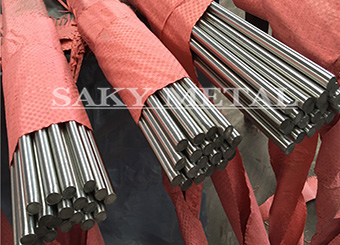
A2-60, A2-70, A2-80 Austenitic stainless steel round bars and hexagonal bar

Introduction

A2-70 and A4-80 are two commonly used austenitic stainless steel fastener property classes defined by ISO 3506. These grades are widely used for bolts, screws, nuts and other fastening components because they provide a good balance between corrosion resistance, strength and durability.

For fastener manufacturers, selecting the correct stainless steel bar material is essential. Round bars and hexagonal bars used for machining fasteners must provide suitable chemical composition, mechanical properties and manufacturing performance.

A2 stainless steel fasteners are generally associated with 304-type stainless steel, while A4 stainless steel fasteners are commonly associated with 316-type stainless steel. A4 grades provide improved corrosion resistance, especially in marine and chloride-containing environments.

This guide explains the difference between A2-70 and A4-80 stainless steel, the meaning of ISO 3506 designations, strength classes and how to select stainless steel round bars and hexagonal bars for fastener production.

Quick Answer: A2-70 vs A4-80 Stainless Steel

  • A2-70:
    Commonly used stainless steel fastener grade for general corrosion-resistant applications, often associated with 304-type stainless steel.
  • A4-80:
    Higher performance stainless steel fastener grade commonly associated with 316-type stainless steel, suitable for marine and chemical environments.
  • A2:
    Suitable for general industrial, indoor and mildly corrosive environments.
  • A4:
    Preferred when higher corrosion resistance against chlorides and seawater is required.
  • 70 / 80:
    Represent the minimum tensile strength class according to ISO 3506.

What Does A2-70 Mean?

A2-70 is an austenitic stainless steel fastener property class defined by ISO 3506. The A2 group represents austenitic stainless steel with corrosion resistance characteristics similar to 304 stainless steel.

The number “70” indicates the strength class. It represents a minimum tensile strength of approximately 700 MPa for the fastener.

A2-70 stainless steel fasteners are widely used because they provide good corrosion resistance, excellent fabrication performance and reliable mechanical properties for general applications.

Designation Meaning
A Austenitic stainless steel family
2 Material group commonly related to 304-type stainless steel
70 Strength class indicating 700 MPa minimum tensile strength

What Does A4-80 Mean?

A4-80 is an austenitic stainless steel fastener property class designed for applications requiring improved corrosion resistance and higher mechanical performance.

A4 stainless steel is commonly associated with 316-type stainless steel, which contains molybdenum to improve resistance against chloride corrosion and aggressive environments.

The “80” represents the strength class, meaning the fastener has a minimum tensile strength of approximately 800 MPa.

Designation Meaning
A Austenitic stainless steel family
4 Material group commonly related to 316-type stainless steel
80 Strength class indicating 800 MPa minimum tensile strength

ISO 3506 Stainless Steel Fastener Grade System

ISO 3506 defines the mechanical property requirements for stainless steel fasteners. The designation system identifies the stainless steel family and strength class.

Class Stainless Steel Family Typical Material Equivalent
A2 Austenitic stainless steel 304-type stainless steel
A4 Austenitic stainless steel with higher corrosion resistance 316-type stainless steel

A2-70 vs A4-80 Stainless Steel Fastener Comparison

A2-70 and A4-80 are both austenitic stainless steel fastener classes defined by ISO 3506. The main difference is corrosion resistance, material family and strength level.

Property A2-70 A4-80
ISO 3506 Group Austenitic stainless steel Austenitic stainless steel
Common Material Family 304 type stainless steel 316 type stainless steel
Corrosion Resistance Good general corrosion resistance Higher resistance, especially chloride environments
Strength Class 70 80
Minimum Tensile Strength Approximately 700 MPa Approximately 800 MPa
Typical Applications General industrial fasteners Marine, chemical and outdoor fasteners

Understanding 70 and 80 Strength Classes

The number after A2 or A4 represents the strength class of the stainless steel fastener according to ISO 3506. It indicates one-tenth of the minimum tensile strength in MPa.

Strength Class Minimum Tensile Strength
50 500 MPa
70 700 MPa
80 800 MPa
90 900 MPa

A higher strength class does not mean a completely different stainless steel family. For austenitic stainless steel fasteners, strength is usually increased through cold working rather than heat treatment.

304 and 316 Stainless Steel Relationship with A2 and A4

A2 and A4 fastener groups are commonly compared with 304 and 316 stainless steel families. However, the exact material equivalence depends on the applicable standard and manufacturer specification.

Fastener Group Common Stainless Steel Family Typical Application
A2 304 type stainless steel General corrosion-resistant fasteners
A4 316 type stainless steel Marine and chemical environments

Stainless Steel Bar Selection for Fastener Manufacturing

Fastener manufacturers usually purchase stainless steel round bars or hexagonal bars as machining raw materials. The selected bar grade should match the required fastener performance, machining process and surface requirements.

Fastener Application Recommended Bar Material
Standard Screws and Nuts 304 / A2 stainless steel round bar
Marine Bolts and Fasteners 316 / A4 stainless steel round bar
Hex Bolts and Machined Fasteners Stainless steel hexagonal bar
High-Speed CNC Fasteners Cold drawn bright bar

Cold Working and Strength Improvement of Austenitic Stainless Steel Bars

Austenitic stainless steels such as 304 and 316 cannot be strengthened by traditional heat treatment. Instead, higher strength levels are usually achieved through cold working processes that increase dislocation density.

This is why stainless steel fastener grades such as A2-70 and A4-80 can achieve higher tensile strength while maintaining the corrosion resistance characteristics of austenitic stainless steel.

Applications of A2-70 and A4-80 Stainless Steel Fasteners

A2-70 and A4-80 stainless steel fasteners are selected according to corrosion environment, mechanical requirements and service conditions. The correct stainless steel bar grade is important for manufacturing reliable bolts, screws, nuts and other fastening components.

Application Recommended Grade
General Industrial Fasteners A2-70 / 304 stainless steel
Marine Equipment A4-80 / 316 stainless steel
Chemical Processing Equipment A4 stainless steel grades
Outdoor Construction A4-80 where chloride exposure exists

Stainless Steel Bar Products for Fastener Manufacturing

Saky Steel supplies stainless steel round bars and hexagonal bars suitable for machining fasteners, screws, bolts and precision components. Material selection depends on grade, diameter, surface condition and manufacturing process.

A4-80 Stainless Steel Bar Product Example

A4-80 fasteners are commonly produced from 316-type stainless steel materials due to their improved corrosion resistance in marine and chemical environments.

A4-80 stainless steel round bar for fastener manufacturing

Stainless Steel Fastener Related Standards

Stainless steel fastener production requires compliance with international standards that define material requirements, mechanical properties and testing methods.

Standard Application
ISO 3506 Mechanical properties of stainless steel fasteners
ASTM F593 Stainless steel bolts, screws and studs
ASTM A276 Stainless steel bars and shapes

FAQ

What is the difference between A2-70 and A4-80 stainless steel?

A2-70 is commonly associated with 304-type stainless steel and general corrosion-resistant applications. A4-80 is commonly associated with 316-type stainless steel and provides improved corrosion resistance for marine and chemical environments.

Is A4-80 stronger than A2-70?

Yes. The strength class indicates that A4-80 has a higher minimum tensile strength requirement than A2-70. A4-80 represents an approximately 800 MPa tensile strength class, while A2-70 represents approximately 700 MPa.

What stainless steel is A2-70?

A2-70 is commonly related to 304-type austenitic stainless steel fasteners. The exact material depends on the applicable standard and manufacturer specification.

What stainless steel is A4-80?

A4-80 is commonly related to 316-type austenitic stainless steel fasteners, which provide improved corrosion resistance compared with A2 grades.

What stainless steel bar is used for fastener production?

Fastener manufacturers commonly use stainless steel round bars and hexagonal bars. Material selection depends on fastener grade, machining method and required corrosion resistance.

Request Stainless Steel Fastener Bar Solution

Need stainless steel round bars or hex bars for A2-70, A4-80 fastener production?

Please provide material grade, bar size, tolerance, surface condition and quantity for technical evaluation and quotation.

Send Your Requirement

Conclusion

A2-70 and A4-80 represent important stainless steel fastener property classes under ISO 3506. A2-70 is widely used for general corrosion-resistant fastening applications, while A4-80 provides enhanced performance for marine, chemical and chloride-containing environments.

For fastener manufacturers, selecting the correct stainless steel bar material is essential. Round bars and hexagonal bars with suitable composition, strength and surface quality help ensure reliable machining performance and final fastener quality.

Understanding the relationship between ISO 3506 grades, stainless steel families and bar materials allows buyers to select the most suitable solution for each fastening application.

For current grades, dimensions and supply options, review our stainless steel round and hexagon bar products.


Post time: Jun-05-2018