Introduction
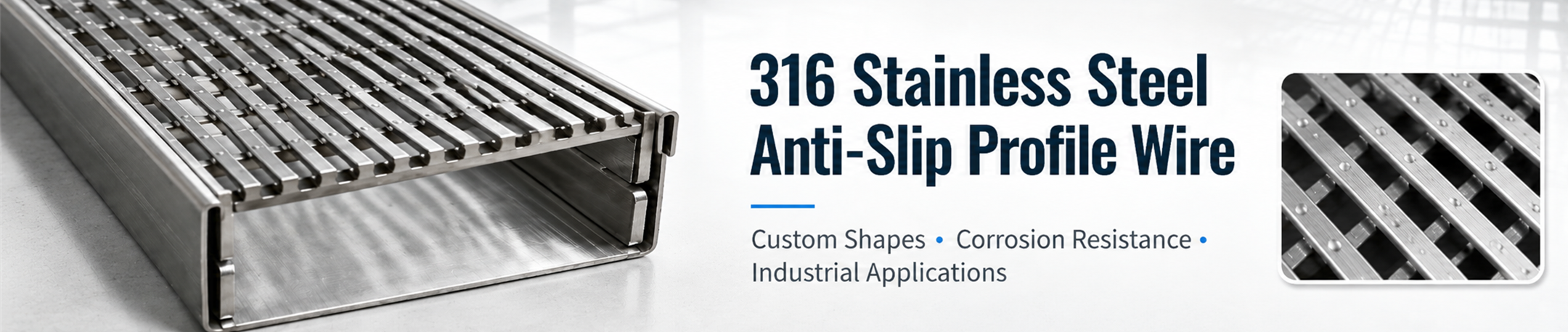
316 stainless steel anti-slip profile wire is a custom-shaped wire designed to improve grip, positioning and mechanical engagement in industrial assemblies. Unlike conventional round wire, anti-slip profile wire can be manufactured with flat surfaces, grooves, ribs, edges or irregular cross-sections that reduce unwanted movement between the wire and surrounding components.
The combination of a specially designed profile and the corrosion resistance of 316 stainless steel makes this wire suitable for marine equipment, filtration systems, conveyor components, medical devices, fasteners, springs, woven structures and precision industrial parts. The final profile can be adjusted according to the customer’s drawing, required friction, assembly method and working environment.
Quick answer:
316 anti-slip profile wire is mainly used where ordinary round wire may rotate, slide or lose position during assembly or operation.
Its customized cross-section increases contact area and mechanical grip while maintaining good corrosion resistance.
What Is 316 Anti-Slip Profile Wire?
Anti-slip profile wire is produced by drawing, rolling or forming stainless steel wire into a non-circular cross-section. The profile may include grooves, serrated edges, flattened areas, angular sections or other geometric features. These features create more surface contact and help prevent rotation or axial movement.
Grade 316 contains molybdenum, which provides improved resistance to pitting and crevice corrosion compared with 304 stainless steel. This makes 316 profile wire a practical choice for humid, marine, chemical and food-processing environments.
Common Cross-Section Shapes
| Profile Type | Main Feature | Typical Use |
|---|---|---|
| Flat Wire | Large contact surface and stable positioning | Springs, clips, screens and reinforcement parts |
| Grooved Wire | Grooves increase friction and mechanical engagement | Filters, fastening systems and woven structures |
| Triangular Wire | Defined edges and controlled contact points | Screens, wedges and precision assemblies |
| Trapezoidal Wire | Stable seating with a wider support surface | Filtration, guide rails and structural inserts |
| Custom Ribbed Profile | Ribs or raised sections improve anti-slip performance | Special machinery, locks and industrial components |
Why Use 316 Stainless Steel?
316 stainless steel offers a balanced combination of corrosion resistance, formability, mechanical strength and surface quality. The addition of molybdenum makes it more resistant to localized corrosion in chloride-containing environments.
• Better corrosion resistance than 304 in marine and chloride service.
• Good cold-forming and profile-drawing capability.
• Suitable for polished, bright, pickled or coated surfaces.
• Good performance in food, chemical and industrial environments.
• Available in soft, quarter-hard, half-hard or hard conditions.
Typical Product Specifications
| Item | Available Options |
|---|---|
| Material | AISI 316, 316L, UNS S31600, UNS S31603 |
| Cross Section | Flat, triangular, trapezoidal, grooved, ribbed or custom shape |
| Size | Manufactured according to drawing and tolerance requirements |
| Condition | Soft annealed, quarter hard, half hard or hard |
| Surface | Bright, matte, pickled, polished or customer specified |
| Supply Form | Coil, spool, straight length or cut pieces |
| Inspection | Dimension, profile, tensile strength, hardness, surface and PMI testing |
Applications of 316 Anti-Slip Profile Wire
Filtration and Screening
Triangular, wedge-shaped and grooved profile wires are used in filter screens, support grids and separation equipment. Their shaped surfaces help maintain stable spacing and reduce movement during fabrication and operation.
Marine and Chemical Equipment
The corrosion resistance of 316 stainless steel makes anti-slip wire suitable for marine hardware, chemical-processing equipment, pump assemblies and components exposed to moisture or chloride-containing environments.
Fastening and Locking Components
Grooves, ribs and angular profiles can improve mechanical locking and reduce unwanted rotation. The wire may be used in clips, retainers, locking rings and custom fastening systems.
Springs and Precision Parts
Flat or shaped 316 wire can provide controlled bending direction, compact spring geometry and improved contact with adjacent components. It is suitable for specialized springs, medical instruments and precision mechanical parts.
Woven and Braided Structures
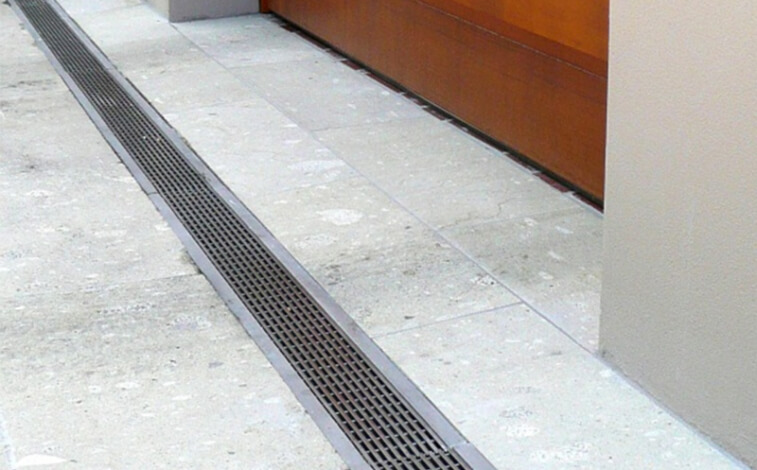
Anti-slip profiles can improve the stability of woven or braided products by increasing contact between intersecting wires. This is useful in conveyor belts, mesh structures, protective screens and architectural assemblies.
How Anti-Slip Performance Is Achieved
Anti-slip performance depends on the geometry of the wire and the way it contacts another component. A flat surface increases contact area, while ribs and grooves generate mechanical engagement. Angular profiles reduce rotation by creating defined contact edges.
The most suitable profile should be selected according to loading direction, mating-material hardness, installation method and required movement resistance. An excessively sharp profile may damage a softer mating surface, while a profile that is too smooth may not provide enough grip.
Manufacturing and Quality Control
316 anti-slip profile wire can be manufactured through cold drawing, precision rolling, die forming or a combination of these processes. Multiple forming passes may be needed to achieve the required geometry without surface cracking or excessive dimensional variation.
Profile inspection should measure more than overall width and thickness. Critical projects may require groove depth, corner radius, angle, straightness, twist and cross-sectional area to be checked using optical measuring systems, profile projectors or precision gauges.
✅ Grade and heat-number verification.
✅ Cross-section and dimensional tolerance inspection.
✅ Tensile strength and elongation testing.
✅ Hardness and temper verification.
✅ Surface inspection for cracks, folds, scratches and scale.
✅ Coil weight, winding condition and packaging inspection.
How to Specify Custom Profile Wire
A drawing is the best way to order anti-slip profile wire. The drawing should identify the full cross-section, critical dimensions, corner radii, tolerances and any groove or rib geometry.
✅ Material grade: 316 or 316L.
✅ Cross-sectional drawing and dimension units.
✅ Width, thickness, angle, groove depth and corner radius.
✅ Mechanical condition or tensile-strength range.
✅ Surface finish and roughness requirement.
✅ Coil, spool or straight-length supply form.
✅ Required quantity and single-coil weight.
✅ MTC, PMI, dimensional report and inspection requirements.
316 vs 304 Anti-Slip Profile Wire
| Comparison | 316 Stainless Steel | 304 Stainless Steel |
|---|---|---|
| Chloride Resistance | Higher due to molybdenum addition | Suitable for general indoor and mild environments |
| Marine Use | Preferred starting grade | May experience localized corrosion |
| Cost | Higher | More economical |
| Best Use | Marine, chemical, food and wet industrial environments | General machinery, indoor systems and moderate environments |
FAQ
What is 316 anti-slip profile wire?
It is 316 stainless steel wire formed into a non-round profile with flat, angular, grooved or ribbed sections. The shape increases contact and helps reduce rotation or sliding in industrial assemblies.
Can the profile be customized from a drawing?
Yes. Width, thickness, groove depth, angle, corner radius, tensile strength and surface finish can be customized according to the customer’s drawing and application.
Why use 316 instead of 304?
316 contains molybdenum and normally provides better resistance to pitting and crevice corrosion in chloride-containing, marine and chemical environments.
How is anti-slip profile wire supplied?
It can be supplied in coils, spools, straight lengths or cut pieces. Packaging and coil weight can be adjusted according to the wire size and customer handling requirements.
Conclusion
316 stainless steel anti-slip profile wire combines a customized mechanical profile with strong corrosion resistance. It is suitable for components that require stable positioning, higher friction or resistance to rotation and sliding. Successful procurement depends on defining the complete cross-section, tolerance, mechanical condition, surface finish and inspection requirements.
Request Custom 316 Profile Wire
SAKY STEEL supplies custom stainless steel profile wire in flat, triangular, trapezoidal, grooved, ribbed and irregular shapes.
Send the material grade, profile drawing, dimensions, tolerance, tensile strength, surface, coil weight and required quantity for technical review and quotation.
Post time: Jul-06-2026