Introduction
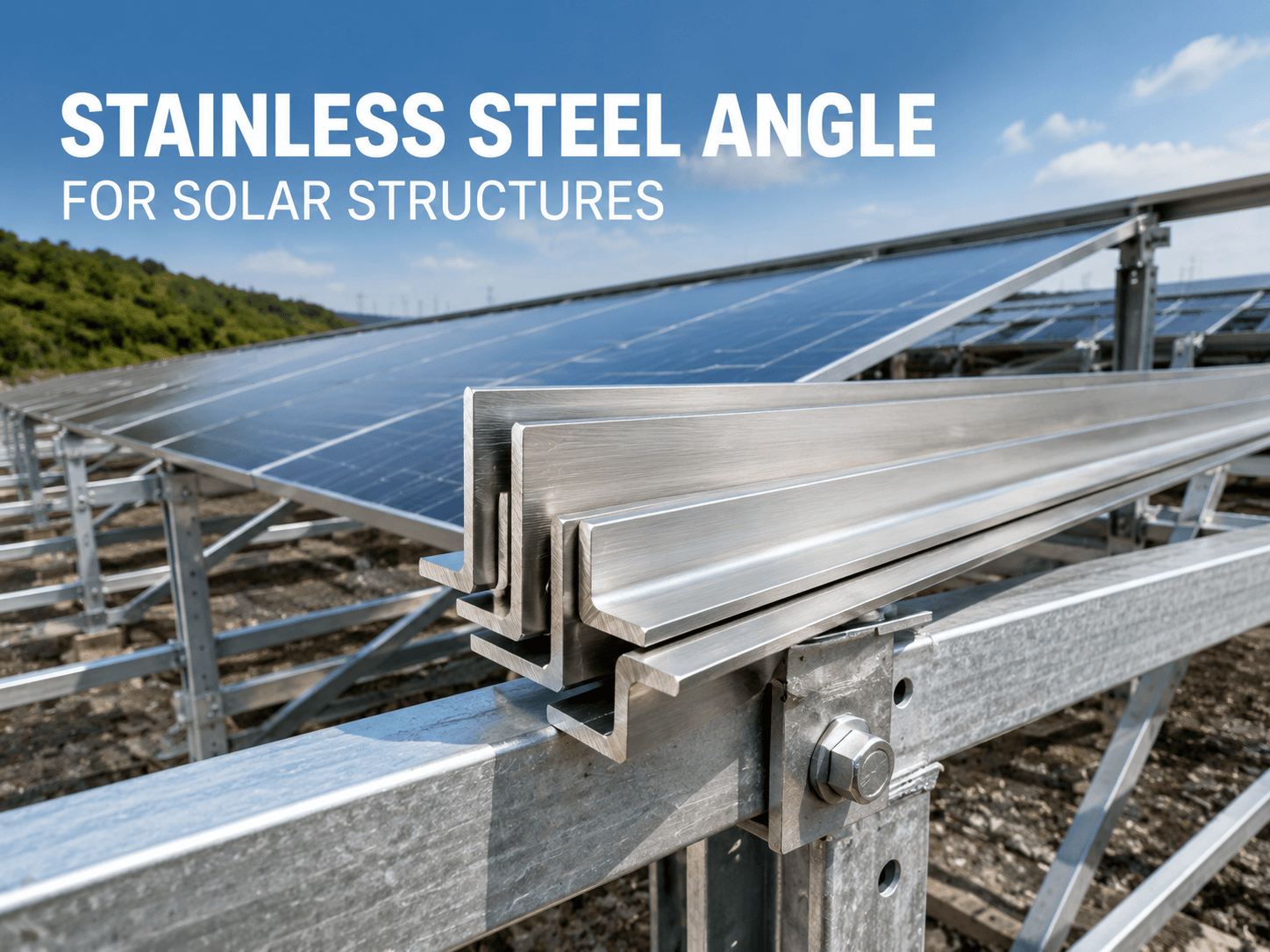
Stainless steel angle bars are increasingly used in solar farm structures and EPC projects where corrosion resistance, long service life and reduced maintenance requirements are important.
Solar mounting structures are exposed to outdoor conditions for decades, including rain, humidity, temperature changes and in coastal areas, salt spray environments. Material selection therefore plays an important role in structural reliability and lifecycle cost.
For EPC procurement, selecting stainless steel angles requires consideration of material grade, dimensions, surface condition, applicable standards, inspection documents and project environment.
Quick Answer: Why Use Stainless Steel Angle Bars for Solar Structures?
- Corrosion Resistance:
Stainless steel provides excellent resistance against outdoor moisture and atmospheric corrosion. - Long Service Life:
Suitable for solar projects requiring reduced maintenance during long-term operation. - EPC Compatibility:
Can be supplied with material certificates, dimensional inspection and customized specifications.
Why Stainless Steel Angles Are Used in Solar Structures
Solar farm structures require materials that can maintain mechanical performance under continuous outdoor exposure. Stainless steel angle bars provide a combination of structural support and corrosion resistance.
Compared with ordinary carbon steel angles, stainless steel angles can reduce corrosion-related maintenance requirements, especially in humid, coastal or chemically aggressive environments.
| Requirement | Benefit of Stainless Steel Angle |
|---|---|
| Outdoor Exposure | Improved resistance to atmospheric corrosion |
| Coastal Environment | Better resistance to chloride-containing environments with suitable grades |
| Long Project Lifecycle | Reduced maintenance requirements |
| Structural Connection | Suitable for brackets, supports and fabricated assemblies |
Key Requirements for Solar Farm Angle Bar Procurement
EPC buyers usually evaluate stainless steel angle bars based on material performance, dimensions, certification requirements and project conditions.
1. Material Grade Selection
The stainless steel grade should be selected according to environmental exposure, especially corrosion conditions and chloride levels.
| Grade | Typical Environment | Main Advantage |
|---|---|---|
| 304 Stainless Steel | Normal outdoor environments | Good general corrosion resistance |
| 316 / 316L Stainless Steel | Coastal and higher chloride environments | Improved resistance to chloride corrosion |
2. Angle Bar Dimensions
Solar EPC projects normally specify angle bar dimensions according to structural design requirements. Common parameters include:
- Equal Angle or Unequal Angle
- Leg dimensions
- Thickness
- Length
- Dimensional tolerance
Common specifications may include products such as L50×50×5 mm or L75×75×6 mm, but final dimensions should always follow the engineering drawings and project requirements.
Surface Condition and Corrosion Life Considerations
Corrosion performance is one of the most important factors for stainless steel angles used in solar structures. Although stainless steel provides natural corrosion resistance through its passive oxide film, service life depends on material grade, environment and surface condition.
For EPC projects, corrosion protection should be evaluated based on the actual installation location rather than only the material name.
| Factor | Impact on Service Life |
|---|---|
| Stainless Steel Grade | Higher alloy grades such as 316/316L provide improved chloride corrosion resistance. |
| Project Location | Coastal and humid areas generally require higher corrosion resistance. |
| Surface Condition | Clean and properly treated surfaces help maintain corrosion resistance. |
| Maintenance | Regular inspection can help identify corrosion risks and extend service performance. |
Common Surface Requirements for Solar Stainless Steel Angles
Depending on project requirements, stainless steel angle bars may be supplied with different surface conditions.
- Pickled and Passivated Surface: Commonly used to improve surface cleanliness and restore corrosion resistance after processing.
- Brushed Finish: Used when appearance and surface consistency are required.
- Polished Surface: Selected for specific architectural or visible applications.
Stainless Steel Angle vs Carbon Steel Angle for Solar Structures
Carbon steel angles are widely used in construction because of their lower initial cost. However, stainless steel angles may provide advantages in projects where corrosion resistance and lifecycle cost are important considerations.
| Feature | Stainless Steel Angle | Carbon Steel Angle |
|---|---|---|
| Corrosion Resistance | Excellent with suitable grade selection | Requires coating or additional protection |
| Initial Cost | Higher material cost | Lower initial cost |
| Maintenance Requirement | Generally lower maintenance requirements | May require coating maintenance |
| Marine Environment | Suitable with appropriate grade | Requires additional corrosion protection |
EPC Procurement Checklist for Stainless Steel Angle Bars
For solar farm EPC projects, procurement teams should confirm technical requirements before placing orders. A complete specification helps avoid material mismatch and project delays.
| Item | Requirement to Confirm |
|---|---|
| Material Grade | 304, 316, 316L or specified project grade |
| Profile Type | Equal angle or unequal angle |
| Dimensions | Leg size, thickness, length and tolerance |
| Standards | ASTM, EN or project-specific requirements |
| Inspection Documents | Material certificate, inspection report and additional tests if required |
| Packing and Delivery | Protection method, quantity and delivery schedule |
Common Standards for Stainless Steel Angle Bars
Solar EPC projects usually require stainless steel angles to comply with recognized material and inspection standards.
| Standard | Description | Application |
|---|---|---|
| ASTM A276 | Stainless steel bars and shapes | General stainless steel angle applications |
| ASTM A479 | Stainless steel bars and shapes for pressure applications | Industrial equipment applications |
| EN 10056 | Dimensions and tolerances of steel angles | Equal and unequal angle structures |
| EN 10204 3.1 | Material inspection certificate requirements | EPC documentation requirements |
Applications of Stainless Steel Angles in Solar Projects
Stainless steel angle bars are used in different parts of solar farm structures depending on project design, load requirements and environmental conditions.
| Application Area | Function of Stainless Steel Angle |
|---|---|
| Solar Mounting Structures | Used as support members, brackets and structural connections. |
| Equipment Support Frames | Provides rigid support for electrical and mechanical equipment. |
| Cable Support Systems | Used for cable trays, brackets and auxiliary structures. |
| Coastal Solar Farms | Selected where additional corrosion resistance is required. |
| Industrial Solar Facilities | Used in fabricated supports and customized structural components. |
How to Select Stainless Steel Angle Bars for Solar EPC Projects?
A suitable stainless steel angle specification should be selected according to project location, structural requirements and procurement standards.
| Project Condition | Recommended Consideration |
|---|---|
| Standard inland solar project | 304 stainless steel angle with suitable dimensions |
| Coastal or high humidity environment | 316/316L stainless steel angle for improved chloride resistance |
| Large EPC project | Confirm standards, certificates, dimensions and inspection requirements before production |
| Customized structure | Provide drawings, loading requirements and fabrication details |
FAQ
Why are stainless steel angles used in solar structures?
Stainless steel angles are used in solar structures because they provide corrosion resistance, structural support and long-term durability in outdoor environments.
Is 304 or 316 stainless steel better for solar mounting structures?
The choice depends on the installation environment. 304 stainless steel is commonly used in normal outdoor conditions, while 316/316L is often selected for coastal or chloride-containing environments.
How long can stainless steel solar structures last?
Service life depends on stainless steel grade, environmental conditions, structural design, surface condition and maintenance. Proper material selection helps achieve long-term performance.
What documents should EPC buyers request for stainless steel angles?
EPC buyers commonly request material certificates such as EN 10204 3.1, dimensional inspection reports and additional inspection documents according to project requirements.
Can stainless steel angles be customized for solar projects?
Yes. Stainless steel angles can be supplied with customized dimensions, lengths, surface conditions and inspection requirements according to engineering drawings.
Stainless Steel Angle Bar Supply for Solar and EPC Projects
SAKY STEEL supplies stainless steel angle bars for industrial structures, solar projects and customized fabrication applications.
Available options include:
- 304 Stainless Steel Angle Bar
- 316 / 316L Stainless Steel Angle Bar
- Equal Angle and Unequal Angle
- Customized Cutting and Processing
- Material Inspection Documentation
For project inquiries, please provide material grade, angle size, thickness, quantity, required standard and application environment.
Conclusion
Stainless steel angle bars are a reliable choice for solar farm and EPC structural applications where corrosion resistance and long service life are important considerations.
Successful procurement requires more than selecting a material grade. EPC teams should evaluate project environment, dimensions, standards, inspection requirements and lifecycle performance.
By selecting the appropriate stainless steel angle specification, solar structures can achieve reliable performance under different outdoor conditions.
Post time: Jul-30-2026