-
Short answer. Dual-certified 316/316L round bar must meet both grade requirements under the stated product specification. The slash on a quotation is not sufficient evidence. Check the manufacturer’s certificate, applicable chemistry and mechanical results, delivery condition and heat iden...Read more »
-
Short answer. A spool or coil should be selected to match the receiving equipment and the agreed wire condition. Package weight alone does not establish compatibility. Confirm the physical interface, intended payoff arrangement, wire-end identification and acceptance records before the order is ...Read more »
-
Quick answer. Stainless steel threads can seize during assembly because rubbing under load disrupts the protective surface film. Exposed metal can adhere and transfer between mating threads: this is galling. It can occur without rust and does not automatically mean the fasteners have the wrong g...Read more »
-
Quick answer. Ferrite Number (FN) and ferrite volume percentage describe related measurements, but they are not interchangeable units. FN is a standardized magnetic measurement scale used for stainless steel weld metal. A percentage must identify how the ferrite fraction was determined. Keep the...Read more »
-
Quick answer. Deburring removes unwanted material left by cutting. Chamfering produces an angled edge with a defined geometry. A small edge break may result from deburring, but “burr-free” does not specify a chamfer size. Welding-end preparation is another requirement: its geometry must suit th...Read more »
-
At a glance. Stainless steel wire rope can become longer because its wires and strands settle together, or because the metal stretches elastically under load. These are different mechanisms. Pre-stretching can reduce constructional extension, but it does not make a rope inelastic. A meaningful ...Read more »
-
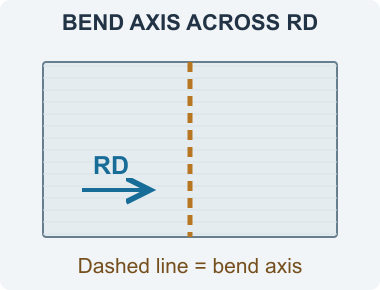
Quick answer. Yes, rolling direction can influence sheet bendability. A bend axis across the rolling direction is often a useful starting point for demanding bends. It is not a universal pass/fail rule: grade, supplied condition, thickness, radius and edge quality must be considered together. De...Read more »
-
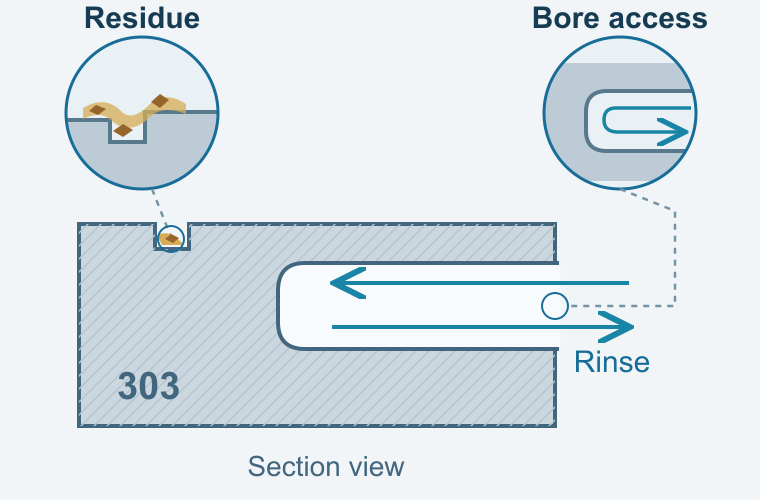
Quick answer. Machined 303 stainless steel can be passivated using a procedure selected for its sulfur-bearing, free-machining composition. Before ordering, agree on the finished-part condition, treatment specification, acceptance test and reporting. The grade, part geometry and machining residu...Read more »
-
Quick answer. Diameter tolerance limits the size of round wire. Ovality limits the difference between the largest and smallest diameter readings at the same cross section. Check both against the purchase specification. Wire can pass the diameter band and still fail a separately specified ovality...Read more »
-
Quick answer: If the longitudinal mill weld can affect assembly, mark the permitted face and seam location on an end view. Identify the datum, set an allowable position band if the location matters within that face, and specify any limit on the internal bead separately. Check an actual mating pa...Read more »
-
Quick Answer: Specify stainless steel coiled tubing using separate dimensions for the tube and the coil. Tube outside diameter (OD) and wall thickness describe the metal tube. Coil inside diameter, outside diameter and height describe its wound package or formed geometry. Continuous length descr...Read more »
-
Quick Answer: A stainless steel tube flattening test compresses a tube specimen between parallel plates to evaluate ductility, weld soundness and resistance to visible cracking or separation under a specified deformation. The applicable product standard, specimen orientation, required plate dist...Read more »
-
Quick Answer: ASTM A666 focuses on austenitic stainless steel sheet, strip, plate and flat bar in annealed and specified cold-worked conditions. ASTM A240/A240M covers chromium and chromium-nickel stainless plate, sheet and strip for pressure-vessel and general applications. The correct choice d...Read more »
-
Quick Answer: A mill edge is the original, untrimmed edge left by rolling. A slit edge is produced when a wider coil is divided by rotary knives and may retain a burr. A cut or trimmed edge is produced to obtain a defined width or final sheet size. The correct choice depends on width tolerance,...Read more »
-
Quick AnswerCorner radius is a functional dimension of stainless steel square and rectangular tube. It affects usable flat-face width, bracket fit, miter joints, base plates and laser-cut features. Specify the governing standard, wall thickness, outside size and any project-specific radius limit...Read more »