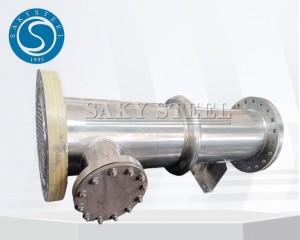
321 Stainless Steel Shell and Tube Heat Exchanger
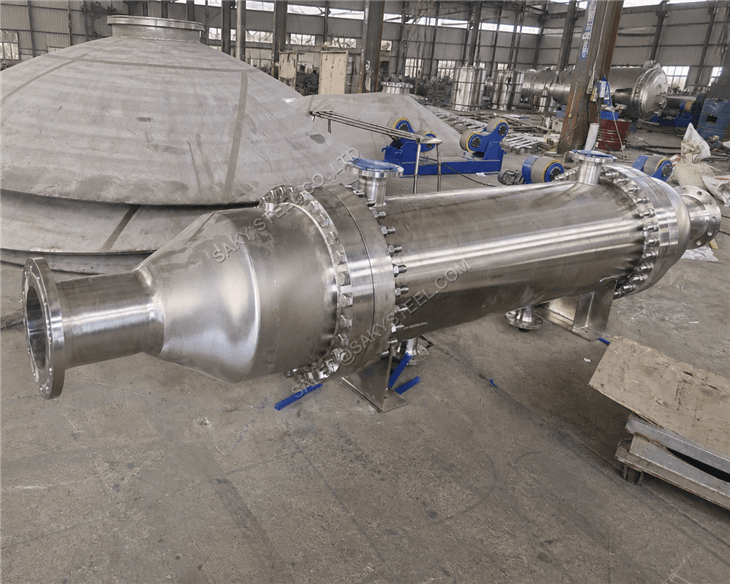
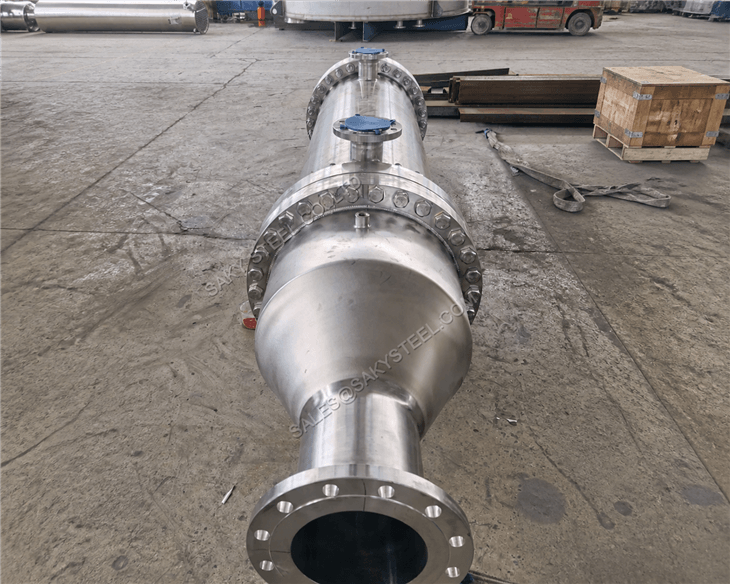
Short Description:
321 Stainless Steel Shell and Tube Heat Exchanger is designed for heat-transfer systems requiring good corrosion resistance and elevated-temperature stability. SAKY STEEL supports customized tube size, shell dimensions, tube-sheet configuration, connection type and fabrication requirements according to customer drawings and operating conditions.
321 Stainless Steel Shell and Tube Heat Exchanger Overview
321 Stainless Steel Shell and Tube Heat Exchanger is a customized heat-transfer unit designed for industrial systems where corrosion resistance, welded fabrication and elevated-temperature stability are important. Grade 321 is a titanium-stabilized austenitic stainless steel commonly considered for thermal service where resistance to sensitization is required.
SAKY STEEL supplies shell and tube heat exchangers according to customer drawings, process conditions and project specifications. The existing SAKY STEEL heat exchanger range covers stainless steel grades including 304, 316 and 321, with tubular products referenced to ASTM A213 and ASTM A249 / ASME SA249.
321 Shell and Tube Heat Exchanger Quick Information
Material: 321 Stainless Steel / UNS S32100
Equipment Type: Shell and Tube Heat Exchanger
Tube Standards: ASTM A213 / ASTM A249 / ASME SA249 where applicable
Tube Condition: Annealed & Pickled / Bright Annealed / Polished / Cold Drawn
Length: Customized
Design: Fixed Tube Sheet / U-Tube / Other Project-specific Configuration
Inspection: Penetrant Testing / Pressure or Leak Testing as Specified
Documentation: MTC / Inspection Documents as Required
Combination of 321 Shell and Tube Heat Exchanger


321 Shell and Tube Heat Exchanger Specifications
| Item | Specification |
|---|---|
| Grade | 321 Stainless Steel / UNS S32100 |
| Equipment Type | Shell and Tube Heat Exchanger |
| Tube Standard | ASTM A213 / ASTM A249 / ASME SA249 where applicable |
| Tube Condition | Annealed and Pickled / Bright Annealed / Polished / Cold Drawn |
| Tube Length | Customized According to Drawing and Heat-transfer Requirements |
| Tube Layout | According to Heat-transfer Design and Customer Specification |
| Tube Sheet | Fixed Tube Sheet / Project-specific Configuration |
| Shell / Nozzles | Customized According to Drawing and Operating Conditions |
| Testing | Penetrant Testing / Pressure Testing / Leak Inspection When Specified |
| Certificate | EN 10204 3.1 / 3.2 or Other Agreed Documentation When Applicable |
Why Use 321 Stainless Steel?
321 stainless steel is a titanium-stabilized austenitic stainless steel. It is commonly selected for welded and elevated-temperature service where improved resistance to sensitization is required.
| Property | Benefit for Heat Exchanger Service |
|---|---|
| Stabilized Grade | Titanium stabilization helps reduce sensitization during certain elevated-temperature thermal cycles. |
| Weldability | Suitable for fabricated shells, tubing and welded components when appropriate procedures are used. |
| Corrosion Resistance | Provides general corrosion resistance for many industrial process environments. |
| Thermal Service | Useful for heat-transfer equipment exposed to elevated or cyclic temperatures. |
Shell and Tube Heat Exchanger Structure
In a shell and tube heat exchanger, one fluid flows through the tubes while another flows through the shell around the tube bundle. Heat transfers across the tube walls without the two media mixing.

| Component | Function |
|---|---|
| Shell | Contains the shell-side fluid and houses the tube bundle. |
| Tube Bundle | Provides the primary heat-transfer surface between the two process media. |
| Tube Sheet | Supports and seals the tubes at the end of the bundle. |
| Baffles | Support the tubes and redirect shell-side flow. |
| Head / Channel | Directs tube-side fluid into and out of the heat exchanger. |
| Nozzles | Provide inlet and outlet connections for process media. |
Shell and Tube Heat Exchanger Types
Shell and tube heat exchangers can be configured in different structural forms according to operating temperature, thermal expansion, cleaning requirements, maintenance access and process conditions.
| Type | Main Feature | Typical Selection |
|---|---|---|
| Fixed Tube Sheet | Tube sheets are fixed to the shell, providing a simple and rigid structure. | Applications where shell-side fouling is limited and a compact welded structure is preferred. |
| U-Tube | Tubes are bent into a U shape and connected to a single tube sheet. | Applications requiring accommodation of thermal expansion and removable tube bundles. |
| Floating Head | One end of the tube bundle can move independently from the shell. | Applications requiring easier mechanical cleaning and greater thermal expansion flexibility. |
304 vs 316 vs 321 Stainless Steel for Heat Exchangers
Material selection should consider process media, chloride exposure, operating temperature, welding conditions and required service life. 321 stainless steel is generally selected when elevated-temperature stability is an important design consideration.
| Grade | Main Characteristic | Typical Selection |
|---|---|---|
| 304 | General corrosion resistance and good fabrication performance | General industrial heat-transfer equipment with moderate corrosion conditions |
| 316 / 316L | Improved chloride and pitting corrosion resistance due to molybdenum | Chemical, marine and chloride-containing process environments |
| 321 | Titanium-stabilized stainless steel for elevated-temperature and welded service | Heat exchangers exposed to thermal cycling or elevated-temperature operating conditions |
Custom Heat Exchanger Design Options
321 shell and tube heat exchangers can be reviewed according to customer drawings, operating parameters and project requirements. The following items should be defined before fabrication.
| Design Item | Custom Requirement |
|---|---|
| Shell Size | Diameter, wall thickness and length according to design requirements |
| Heat Exchanger Tubes | Tube diameter, wall thickness, length, quantity and arrangement |
| Tube Sheet | Material, thickness, hole arrangement and connection method |
| Baffle Design | Baffle spacing and configuration according to shell-side flow requirements |
| Nozzles | Size, orientation, flange type and connection requirements |
| Operating Conditions | Process media, flow rate, inlet/outlet temperature and operating pressure |
| Design Conditions | Design pressure, design temperature and corrosion allowance where required |
| Inspection | NDT, pressure testing, leak testing and third-party inspection when specified |
Manufacturing & Welding
Heat exchanger fabrication requires controlled preparation of the shell, tubes, tube sheets, baffles and process connections. Welding and tube-to-tube-sheet joining requirements should be defined according to the approved drawing and project specification.
| Manufacturing Stage | Control Point |
|---|---|
| Material Preparation | Material grade, dimensions and traceability are checked before fabrication. |
| Tube Sheet Processing | Tube-hole pattern and dimensional accuracy are controlled according to the drawing. |
| Tube Bundle Assembly | Tube arrangement, baffle spacing and alignment are checked during assembly. |
| Tube-to-Tube Sheet Joining | Welding, expansion or combined joining methods are selected according to the design requirement. |
| Final Assembly | Nozzles, heads, supports and other components are assembled according to approved drawings. |
Penetrant Testing & Weld Inspection
Penetrant testing can be used to inspect accessible stainless steel weld surfaces for surface-breaking discontinuities when required by the project specification. Additional nondestructive testing methods can be arranged according to the agreed inspection plan.


Heat Exchanger Sealing & Pressure Testing
Sealing integrity is an important part of heat exchanger inspection because leakage can result in loss of process efficiency or cross-contamination between the shell-side and tube-side media.
| Test / Inspection | Purpose |
|---|---|
| Pressure Test | Verify pressure integrity of the assembled heat exchanger according to the specified test procedure. |
| Leak Inspection | Check for leakage at welded joints, tube-to-tube-sheet connections and sealing surfaces. |
| Visual Inspection | Check fabrication condition, sealing surfaces and visible weld quality. |
| Additional Leak Testing | Gas or other agreed leak-detection methods can be specified for particular project requirements. |

Inspection & Documentation
Inspection requirements can be arranged according to the approved drawing, project specification and agreed inspection plan. The final scope should be confirmed before fabrication.
| Inspection Item | Purpose |
|---|---|
| Material Verification | Verify 321 stainless steel grade and material traceability. |
| Dimensional Inspection | Check shell, tube, tube sheet, nozzle and assembly dimensions against approved drawings. |
| Weld Inspection | Verify visible weld condition and required NDT scope. |
| Pressure / Leak Testing | Verify pressure integrity and sealing performance according to the agreed test procedure. |
| Final Visual Inspection | Check overall fabrication quality, surface condition, identification and completeness before shipment. |
| Documentation | MTC, inspection reports and agreed project documents can be supplied as required. |
Applications of 321 Shell and Tube Heat Exchangers
321 stainless steel shell and tube heat exchangers are suitable for industrial heat-transfer duties where elevated-temperature stability, corrosion resistance and welded fabrication are important.
| Chemical Processing
Process heating and cooling duties |
Petrochemical
Thermal exchange in process systems |
Power Generation
High-temperature utility and process service |
| Industrial Heating
Hot fluid and thermal circulation systems |
Food & Beverage
Process heat transfer where material suitability is confirmed |
General Industry
Customized heating and cooling equipment |
Information Required for a Heat Exchanger Quote
For a meaningful technical review and quotation, please provide the process data and equipment requirements below whenever available.
| Required Information | Example / Description |
|---|---|
| Process Media | Shell-side and tube-side fluid |
| Flow Rate | Required flow for each medium |
| Inlet Temperature | Shell-side and tube-side inlet temperature |
| Outlet Temperature | Required outlet temperature for each medium |
| Operating Pressure | Normal operating pressure on both sides |
| Design Pressure | Required design pressure if already specified |
| Design Temperature | Maximum design temperature |
| Heat Duty / Area | Required heat duty or heat-transfer area if available |
| Connection Requirements | Nozzle size, flange standard and orientation |
| Drawing / Design | Customer drawing, datasheet or existing equipment dimensions |
| Inspection Requirements | NDT, pressure test, leak test or third-party inspection |
| Quantity & Destination | Number of units and delivery country / port |
Heat Exchanger Packaging
Packaging is selected according to heat exchanger dimensions, weight, nozzle configuration and transportation method. Suitable protection helps reduce the risk of surface damage, moisture exposure and impact during handling and shipment.
- Protective wrapping for exposed stainless steel surfaces.
- Flange and nozzle protection.
- Internal fixation where required for transport stability.
- Identification labels and handling marks.
- Wooden skid, pallet or case according to equipment size and transport requirements.


Why Choose SAKY STEEL?
Customized Equipment Review
Heat exchanger dimensions, tube arrangement, shell configuration, connections and testing requirements can be reviewed according to drawings and process conditions.
321 Stainless Steel Material Support
321 stainless steel tubing and fabricated components can be matched to elevated-temperature and welded service requirements where applicable.
Inspection Coordination
Penetrant testing, pressure testing, leak inspection and additional agreed inspection items can be arranged according to the project specification.
Material Traceability
MTC and agreed inspection documentation can be supplied according to confirmed order requirements.
Export Packaging
Packaging and shipment preparation can be selected according to equipment size, weight and international transportation requirements.
Frequently Asked Questions
Why choose 321 stainless steel for a shell and tube heat exchanger?
321 stainless steel is a titanium-stabilized austenitic grade often considered for welded and elevated-temperature service where resistance to sensitization is important.
Can the shell and tube heat exchanger be customized?
Yes. Shell size, tube diameter, tube length, tube-sheet configuration, nozzle arrangement, pressure requirements and inspection scope can be reviewed according to the project specification.
What heat exchanger types can be supplied?
Fixed tube sheet, U-tube and other project-specific shell and tube heat exchanger configurations can be reviewed according to thermal expansion, cleaning and maintenance requirements.
Can pressure and leak testing be arranged?
Yes. Pressure testing, leak inspection and additional agreed test methods can be included according to the project specification and inspection plan.
Can MTC and inspection documents be supplied?
Yes. Material certificates and agreed inspection documentation can be supplied according to the confirmed order requirements.
What information should I send for quotation?
Please provide process media, flow rate, inlet and outlet temperatures, operating and design pressure, heat duty or required area, connection details, drawing, quantity, destination and inspection requirements.
Request a 321 Shell and Tube Heat Exchanger Quote
Send your process data, drawing or equipment specification. SAKY STEEL will review the material, structure, inspection and delivery requirements before confirming the offer.