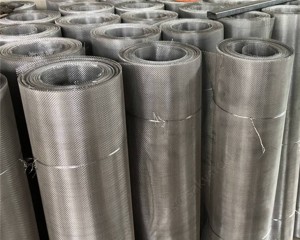
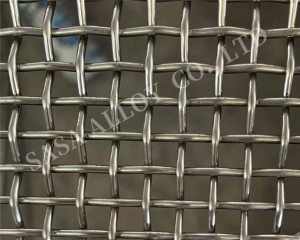
Dutch Weave Stainless Steel Wire Mesh
Short Description:
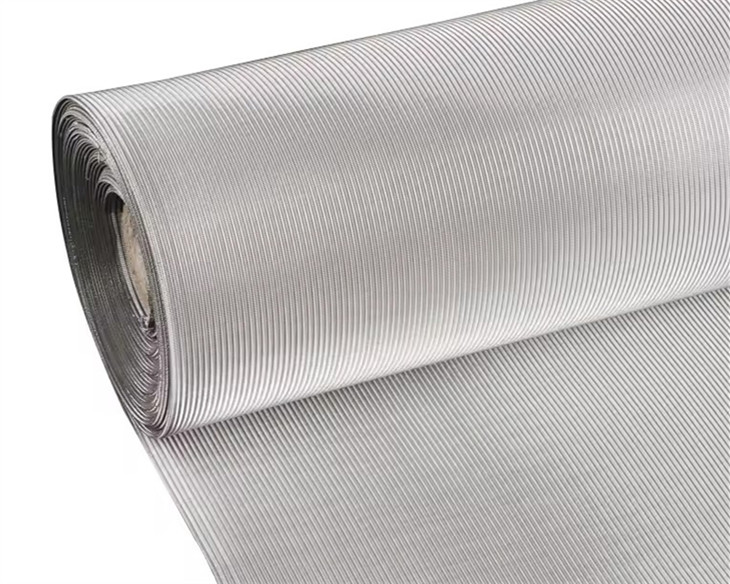
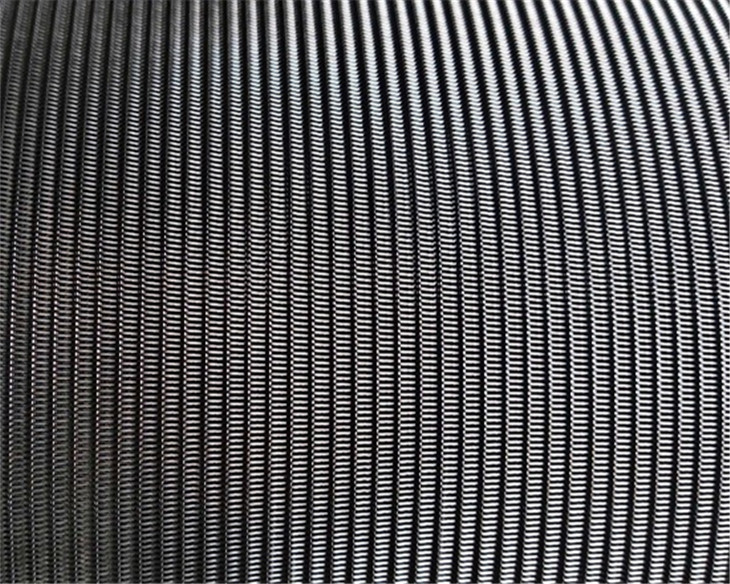
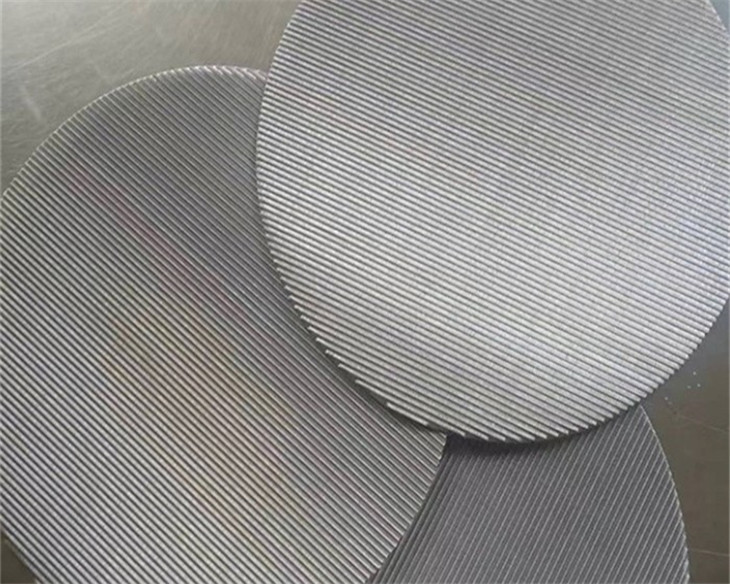
Dutch weave stainless steel wire mesh for process filtration where square-aperture mesh is unsuitable. Available in plain Dutch, twill Dutch and reverse Dutch constructions, supplied in rolls, cut pieces and filter discs to an agreed filtration specification.
SAKYSTEEL supplies Dutch weave stainless steel wire mesh for industrial filtration. This product is a dense woven filter cloth used when ordinary square-opening mesh cannot provide the required particle retention or structural performance. It uses different warp and weft wire arrangements to create a tortuous filtration path rather than a simple square aperture.
Select this product by weave construction, warp and weft wire combination, agreed retention or pore test, flow requirement and differential-pressure duty. Mesh count alone is not a filtration rating.
Request Dutch Weave Selection & Quote
Dutch Weave Filter Mesh at a Glance
| Product form | Dense woven stainless steel filter cloth |
|---|---|
| Confirmed constructions | Plain Dutch / Twill Dutch / Reverse Dutch weave |
| Material grades | 304 / 304L / 316 / 316L; other grades require written confirmation |
| Supply forms | Roll / cut sheet / strip / disc / agreed fabricated piece |
| Essential RFQ data | Weave or construction data, required retention basis, dimensions, process medium, temperature, flow, pressure differential, cleaning method and quantity |
Common Dutch Weave Specifications
Use the following established mesh designations as starting points for a quotation in 304, 304L, 316 or 316L. The counts refer to warp × weft wires per inch.
| Weave construction | Warp × weft mesh |
|---|---|
| Plain Dutch | 12 × 64 |
| Plain Dutch | 24 × 110 |
| Plain Dutch | 30 × 150 |
| Plain Dutch | 40 × 200 |
| Plain Dutch | 80 × 400 |
| Twill Dutch | 165 × 1100 |
| Twill Dutch | 200 × 2000 |
These reference constructions are not micron ratings or a stock list. State both wire diameters, required roll width and length or cut dimensions, and the filtration acceptance method. Reverse Dutch constructions are reviewed against your drawing, sample or specified wire combination.
Choose the Filter Construction Before the Grade
The weave determines the internal flow path, structural behaviour and how the filter cloth retains particles. Material grade controls corrosion and fabrication suitability; it does not define filtration performance.
Plain Dutch Weave
Plain Dutch weave typically combines comparatively larger warp wires with fine weft wires packed closely together. It is used as a dense surface-filtration cloth where the buyer can define an established construction or an agreed pore/retention requirement.
Twill Dutch Weave
Twill Dutch weave uses a twilled interlacing pattern and can form a denser structure than a comparable plain construction. It is considered for fine process filtration, but its designation must not be converted directly into a micron rating without an agreed test basis.
Reverse Dutch Weave
Reverse Dutch weave reverses the usual relationship between the warp and weft systems: many finer wires are arranged in one direction and stronger wires support the structure in the other. It is reviewed for applications that need fine filtration together with mechanical stability, including backwashed or cyclic filter equipment.
How to Specify Filtration Performance
A purchasing description such as “316L, 200 mesh” is incomplete for Dutch weave. Dense filter cloth does not have the same directly measurable square aperture as ordinary square woven mesh.
| Parameter | What it tells the buyer | What must be agreed |
|---|---|---|
| Warp × weft construction | Wire population and structural arrangement | Designation and permitted tolerance |
| Warp and weft wire diameters | Strength, thickness and flow-path geometry | Nominal dimensions and inspection method |
| Retention or pore value | Separation target under a stated method | Nominal/absolute/geometric basis and test standard |
| Flow or pressure drop | Hydraulic or gas-flow performance | Fluid, viscosity, temperature, clean/loaded state and test conditions |
| Differential-pressure duty | Mechanical loading on the cloth and support | Operating, upset, backwash and cycle requirements |
Important: a material certificate verifies the reported alloy information for the supplied lot. It does not by itself verify pore size, filtration efficiency, pressure drop or the performance of a finished filter element.
Material Grade Selection
| Grade | Selection direction | Verify before order |
|---|---|---|
| 304 / 304L | General industrial filtration in compatible environments | Process chemistry, cleaning solution, temperature and fabrication route |
| 316 / 316L | Starting point for more demanding wet, chloride-bearing or chemical duties | Chloride level, pH, temperature, deposits, crevices and weld exposure |
No stainless grade is corrosion-proof. Final selection must consider the complete process and cleaning environment rather than the product name alone.
Supply Forms and Edge Requirements
Inspection and Order Documentation
Write every acceptance item into the purchase specification. The applicable test method and acceptance limit must be agreed before production; one measurement cannot be assumed to establish every performance characteristic.
| Check | Purpose | Order note |
|---|---|---|
| Material identity and certificate | Links the reported chemistry to the supplied lot | Specify certificate type and traceability requirement |
| Construction and wire diameter | Confirms the ordered weave geometry | Define sampling and tolerance |
| Width, length and cut dimensions | Confirms delivered form | State usable dimensions and edge treatment |
| Pore or retention test | Evaluates the agreed filtration characteristic | Specify method, medium, criterion and reporting unit |
| Visual condition and cleanliness | Identifies weaving defects, damage or contamination | Define application-specific acceptance criteria |
Application Review
| Application direction | Information required for review |
|---|---|
| Polymer and extrusion filtration | Polymer, temperature, pressure, contaminant, screen-pack design and change interval |
| Chemical process filtration | Complete chemistry, concentration, temperature, solids, flow and cleaning method |
| Liquid-solid separation | Particle distribution, liquid properties, retention target, cycle and cake-release method |
| Backwashable filter equipment | Forward/backwash differential pressure, cycle count, support geometry and cleaning regime |
Information Required for a Dutch Weave Mesh RFQ
Frequently Asked Questions
Is Dutch weave mesh count equal to a micron rating?
No. Dutch weave does not have the same simple square opening as square woven mesh. A micron, pore or retention value is meaningful only when its definition and test method are stated.
Is reverse Dutch weave the same as twill Dutch weave?
No. Reverse Dutch changes the relationship and direction of the fine and supporting wire systems. Twill Dutch uses a twilled interlacing pattern. The constructions must be specified separately.
Can 316L guarantee compatibility with every chemical?
No. Grade selection depends on the full chemistry, concentration, temperature, deposits, crevices, cleaning process and fabrication. Provide operating data for review.
What is needed to replace an existing filter cloth?
Provide the original construction or drawing, material grade, roll or cut dimensions, service conditions, retention requirement, support arrangement and any failure or performance history. A physical sample can help confirm construction but does not replace an agreed purchase specification.
Request Dutch Weave Selection & Quote
Send the process conditions, required filtration basis, construction or sample information, grade, dimensions and quantity for technical and commercial review.