-
Quick AnswerCommon stainless steel wire processing problems are usually linked to a mismatch among grade, diameter tolerance, tensile condition, cast/helix, surface and lubrication—not simply whether the wire looks bright. Inspect the incoming coil and record machine settings before changing the...Read more »
-
Quick AnswerThere is no single “best” stainless steel wire material. The correct grade and condition depend on corrosion exposure, forming method, required strength, temperature, magnetic response, surface, diameter and applicable wire specification. Start with the Application Application ne...Read more »
-
Quick AnswerStainless steel wire is used in springs, screens, mesh, brushes, fasteners, formed parts, welding consumables, cables and filtration components. The correct wire is selected by the actual function—not by application name alone. Grade, diameter, temper, tensile range, surface, toleran...Read more »
-
Quick Answer: 2B is the most common smooth cold-rolled mill finish; BA (2R) is brighter because it is bright annealed; No. 4 is a directional brushed or dull-polished finish; and No. 8 is a highly reflective bright-polished finish. Select by service environment, appearance, cleanability, fabric...Read more »
-
Quick Answer: Stainless steel wire combines corrosion resistance with a wide range of strength, ductility, surface and magnetic-response options. Its final behavior is controlled not only by grade, but also by wire diameter, annealed or cold-worked condition, drawing reduction, surface finish a...Read more »
-
Quick Answer: 304L is the low-carbon version of 304 stainless steel, commonly identified as UNS S30403 and EN 1.4307. Its lower carbon level improves resistance to sensitization-related intergranular corrosion after welding. It retains the general corrosion resistance, formability and weldabili...Read more »
-
Direct answer: “stainless steel wire” is a product family, not one interchangeable material. Buyers must define grade, wire condition, diameter, tolerance, surface, mechanical properties and the forming or service requirement. Spring wire, cold-heading wire, welding wire, weaving wire and genera...Read more »
-
Quick AnswerStainless steel wire is commonly produced through surface preparation, lubrication, one or more drawing passes, optional intermediate annealing, cleaning and final conditioning. Drawing reduces cross-sectional area and increases strength through cold work, while pass reduction, die c...Read more »
-
Quick Answer: Stainless steel wire drawing reduces wire cross-section by pulling prepared wire through one or more dies. Die geometry, reduction per pass, lubrication, temperature, intermediate annealing and surface preparation determine dimensional accuracy, mechanical properties and surface qu...Read more »
-
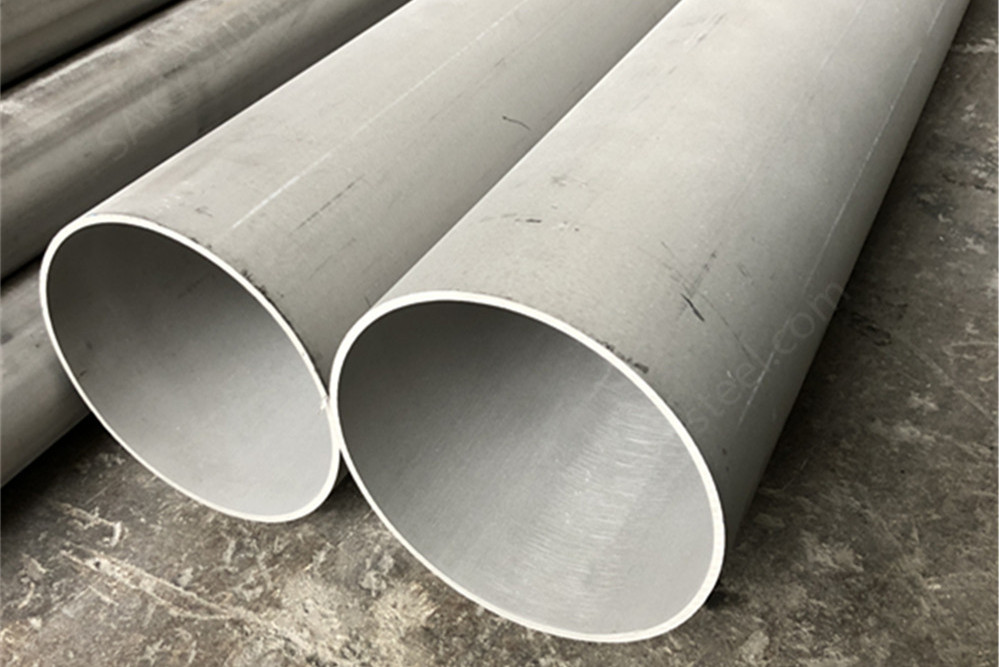
Direct answer: select stainless steel seamless pipe by service fluid, pressure-temperature design, alloy grade, product standard, dimensions and inspection requirements—not by the word “seamless” alone. Seamless construction removes a longitudinal weld seam, but it does not create a universal p...Read more »