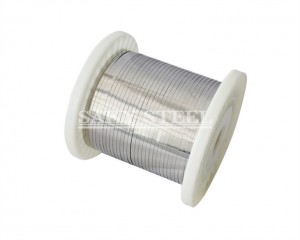
ASTM A580 316 Stainless Steel Anti-Slip Profile Wire
Short Description:
316 stainless steel anti-slip profile wire UNS S31600 offers corrosion resistance and shaped grip surfaces for screens, filters and industrial steps. Custom profiles, cut length, coils, MTC and EN 10204 3.1 are available when specified.
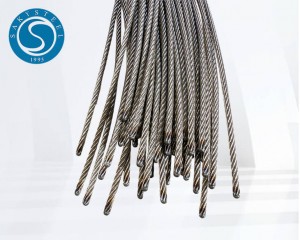
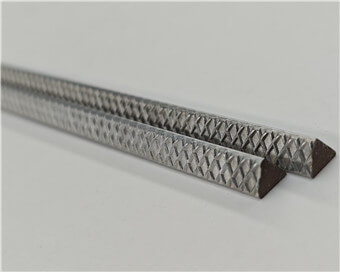
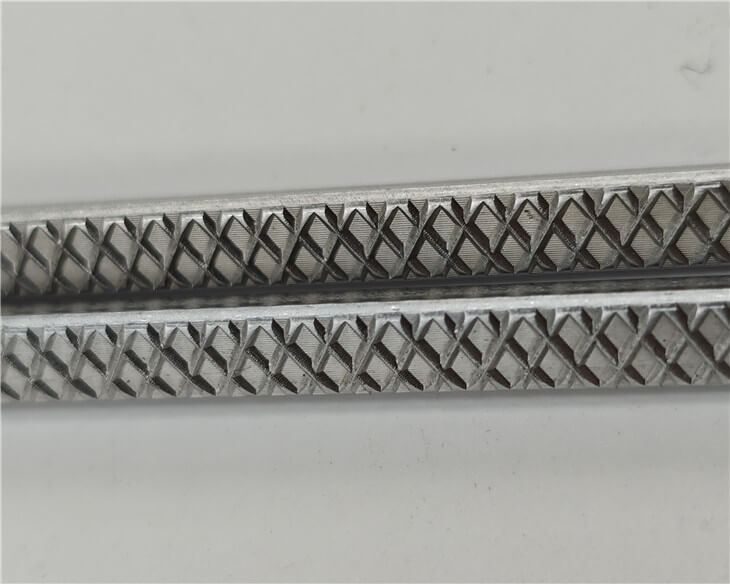
316 Stainless Steel Anti-Slip Profile Wire is a custom-shaped stainless steel wire made from molybdenum-bearing austenitic stainless steel, commonly identified as AISI 316, UNS S31600 and EN 1.4401. It is supplied as shaped wire, wedge wire, grip wire or special profile wire for screen panels, filter supports, industrial steps, conveyor components and anti-slip contact surfaces where corrosion resistance and controlled profile geometry are required.
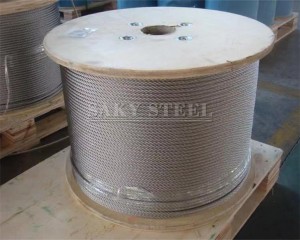
SAKY STEEL supplies 316 stainless steel profile wire in coil, spool or cut-length form according to drawing requirements. Available options may include cold drawing, profile rolling, straightening, polishing, pickling, dimensional inspection, surface inspection, PMI, MTC and EN 10204 3.1 documentation when specified.
Product Parameters
| Item | Product Details |
|---|---|
| Product Name | 316 Stainless Steel Anti-Slip Profile Wire |
| Grade | 316 / AISI 316 / SUS316 |
| UNS / EN | UNS S31600 / EN 1.4401 |
| Material Family | Molybdenum-bearing austenitic stainless steel |
| Product Shape | Anti-slip profile wire and shaped wire |
| Size Range | Custom cross section by drawing |
| Supply Form | Coil, spool, straight length or cut piece |
| Surface Finish | Bright, pickled, polished or passivated |
| Delivery Condition | Annealed, cold drawn or work hardened |
| Standard | ASTM A580 / ASTM A313 when applicable |
| Tolerance | Drawing-specific profile tolerance |
| Available Services | Profile drawing, straightening, cutting, polishing |
| Certificates | MTC, EN 10204 3.1, PMI and dimension report |
Chemical Composition
316 stainless steel profile wire contains chromium, nickel and molybdenum. Molybdenum improves resistance to pitting and crevice corrosion in many chloride-containing environments compared with 304 stainless steel.
| Element | Typical ASTM Reference Range | Technical Function |
|---|---|---|
| Carbon | 0.08 max | Controlled for corrosion resistance and formability |
| Manganese | 2.00 max | Supports melting control and austenitic structure |
| Silicon | 1.00 max | Deoxidation and oxidation resistance support |
| Phosphorus | 0.045 max | Restricted residual element |
| Sulfur | 0.030 max | Restricted for ductility and surface quality |
| Chromium | 16.00–18.00% | Forms the passive stainless surface film |
| Nickel | 10.00–14.00% | Stabilizes austenite and improves ductility |
| Molybdenum | 2.00–3.00% | Improves chloride pitting resistance |
| Iron | Balance | Base metal matrix |
Actual chemical composition shall be confirmed by the applicable product specification and MTC.
Mechanical Properties
Mechanical properties of 316 profile wire depend strongly on the final profile shape, cold work, annealing condition, drawing reduction and testing direction. The values below are typical references for engineering discussion and are not universal order guarantees.
| Property | Typical Reference | Condition | Engineering Meaning |
|---|---|---|---|
| Tensile Strength | About 515 MPa minimum reference | Annealed wire reference | Supports forming and general load use |
| Yield Strength | About 205 MPa minimum reference | Annealed wire reference | Indicates resistance to permanent deformation |
| Elongation | Approximately 30–40% reference | Annealed condition | Useful for profile drawing and forming |
| Cold-Worked Strength | Higher, profile dependent | Cold drawn | Improves springback and grip stiffness |
| Hardness | Condition dependent | Annealed or cold worked | Affects forming, wear and anti-slip edge behavior |
| Density | Approximately 8.0 g/cm³ | Room temperature | Used for coil and shipment weight calculation |
| Magnetic Response | Generally non-magnetic to slightly magnetic | Cold work dependent | Cold drawing may increase magnetic response |
| Corrosion Resistance | Better pitting resistance than 304 in many media | Surface dependent | Useful for wet, washdown and outdoor components |
Common Size Table
| Profile Type | Main Dimension | Supply Form | Surface | Typical Use |
|---|---|---|---|---|
| Wedge Profile | Drawing-specific | Coil or straight length | Bright or polished | Screen and filter supports |
| Ribbed Anti-Slip Wire | Custom rib height | Coil or cut length | Pickled or polished | Grip strips and contact surfaces |
| Flat-Sided Profile | Width and height by drawing | Straightened pieces | Bright finish | Frames, guides and support parts |
| Triangular Profile | Angle and edge by drawing | Coil or cut piece | Polished | Anti-slip and locating edges |
| Custom Profile | Made to drawing | Project-specific | As specified | OEM industrial components |
Different Specifications Comparison
Profile Wire Surface and Condition Comparison
| Condition | Main Feature | Recommended Use | Purchase Advice |
|---|---|---|---|
| Soft Annealed | Higher ductility and formability | Bending and forming | Specify bend radius and profile tolerance |
| Cold Drawn | Improved strength and profile definition | Anti-slip ribs and structural wire parts | Confirm tensile range and straightness |
| Bright Surface | Clean appearance and smooth surface | Visible components and clean assemblies | Protect surface during packing |
| Polished Surface | Improved surface finish | Grip and touch surfaces | State roughness or polish requirement |
| Pickled Surface | Removes scale and improves cleanliness | Industrial screen and filter use | Confirm color and surface acceptance |
Comparison with Related Stainless Profile Wire Grades
| Grade | Main Strength | Relative Limitation | Typical Selection |
|---|---|---|---|
| 304 | Good general corrosion resistance and formability | Lower chloride pitting resistance than 316 | Indoor or mild industrial profile wire |
| 316 | Improved pitting resistance with molybdenum | Higher cost than 304 | Wet, washdown and outdoor profile wire |
| 316L | Lower carbon for welded assemblies | May require separate order specification | Profile wire parts requiring welding |
| 430 | Magnetic and economical ferritic stainless | Lower corrosion and forming performance | Dry, low-cost profile applications |
Equivalent Standards and International Names
| System | Designation | Relationship |
|---|---|---|
| Common Grade | 316 | Standard commercial designation |
| UNS | S31600 | Unified Numbering System designation |
| EN / W.Nr. | 1.4401 / X5CrNiMo17-12-2 | Common European cross-reference |
| JIS | SUS316 | Japanese grade designation |
| GB Reference | 06Cr17Ni12Mo2 | Common Chinese cross-reference |
| Wire Standard | ASTM A580 / ASTM A313 | Applicable by wire use and condition |
Production Process Flow
316 stainless steel wire rod is selected according to the required chemistry and surface quality.
Material may be softened and cleaned before profile forming.
The wire is reduced and controlled for size and strength.
Special dies or rolls form the anti-slip cross section.
The wire is supplied as coil, spool or straight length as required.
Bright, pickled, polished or passivated surfaces are prepared.
Profile dimensions, surface and material traceability are checked.
Coils, spools or cut pieces are protected for export shipment.
Product Inspection
| Inspection | Method | Purpose |
|---|---|---|
| Chemical Analysis | Laboratory analysis or MTC review | Confirm 316 / UNS S31600 chemistry |
| PMI | Positive material identification | Available when specified; not a replacement for full chemistry |
| Profile Dimension | Caliper, projector or gauge inspection | Verify width, height, rib and cross-section shape |
| Surface Inspection | Visual and surface finish review | Check scratches, cracks, scale and polishing quality |
| Tensile Test | Mechanical testing when specified | Confirm strength or temper requirements |
| Hardness Test | Microhardness or suitable method | Evaluate cold-worked or formed condition |
| Straightness or Coil Check | Visual and dimensional inspection | Confirm delivery form and handling suitability |
| Traceability Review | Heat number and label verification | Link product to MTC and EN 10204 3.1 |
Product Packaging
Wire can be packed in coils, spools or reels according to profile size and handling needs.
VCI paper, plastic film or waterproof wrapping can be used for export shipment.
Separators, inner cores and controlled winding reduce surface damage.
Coils and spools can be packed in wooden cases or on pallets.
Grade, size, profile number, heat number and customer shipping marks can be retained.


Applications, Core Performance and Fabrication
Primary Applications
- Anti-slip contact strips and traction surfaces
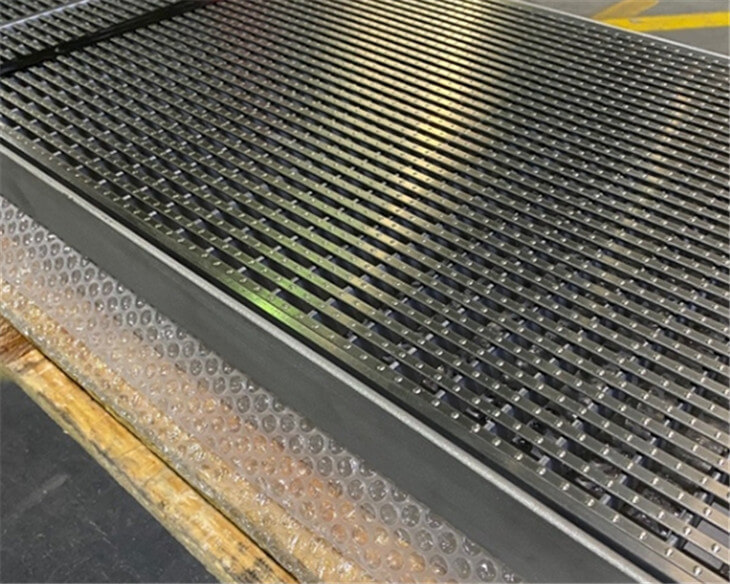
- Stainless steel screen and filter support wires
- Industrial step, grating and walkway components
- Conveyor guide wires and positioning parts
- Food equipment guards and support structures
- Architectural grip or trim components
- OEM custom shaped stainless wire parts
Corrosion Resistance
316 profile wire is selected when better pitting resistance than 304 is required in wet, washdown or mildly chloride-containing service. Surface finish is important: smoother polished surfaces normally clean more easily and reduce crevice retention compared with rough or damaged surfaces.
Anti-Slip Profile Function
Anti-slip performance depends on profile geometry, rib height, edge radius, surface finish, load direction and the mating material. The wire should be designed from a drawing or sample so that grip, cleanability and assembly requirements are balanced.
Fabrication and Forming
316 stainless steel has good formability in the annealed condition, while cold-worked profile wire offers higher strength and stiffness. Bending, welding or crimping requirements should be confirmed before production because profile shape may affect springback and local stress.
Welding
316 profile wire can be welded using common stainless steel welding processes when the joint design is suitable. If welded corrosion resistance is critical, 316L or a suitable welding procedure may be requested to reduce sensitization risk.
Heat Treatment
316 stainless steel is not precipitation hardenable. Solution annealing may be used to restore corrosion resistance and ductility after heavy cold work, while stress relief must be evaluated carefully to avoid unwanted effects on corrosion performance or dimensions.


Why Choose SAKY STEEL?
Anti-slip wire can be produced according to drawing, sample or profile tolerance requirements.
Bright, pickled, polished, coil, spool and cut-length supply can be discussed.
Material identification can be maintained from production record to final packing label.
MTC and EN 10204 3.1 certificate can be provided according to the purchase order.
PMI, profile dimension, tensile, hardness and surface inspection can be arranged when specified.
Coil, spool, wooden case, pallet and customized shipping marks are available.
FAQ
What is 316 stainless steel anti-slip profile wire?
It is a custom-shaped stainless steel wire made from 316 / UNS S31600 material. The cross section can include ribs, wedge surfaces or special edges to improve grip, support or positioning performance.
What standard applies to 316 profile wire?
ASTM A580 is commonly referenced for stainless steel wire, while ASTM A313 may apply when spring-wire properties are required. For anti-slip profile wire, the drawing, profile tolerance and delivery condition are also critical order requirements.
Can the anti-slip profile be customized?
Yes. Width, height, rib shape, wedge angle, edge radius and surface finish can be discussed according to drawings or samples. A clear cross-section drawing is recommended for accurate quotation and production review.
Is 316 better than 304 for profile wire?
316 generally offers better resistance to chloride pitting than 304 because it contains molybdenum. It is often selected for wet, washdown, outdoor or mildly chloride-containing applications, but final suitability depends on the actual environment.
Can 316 anti-slip profile wire be welded?
Welding is possible with suitable procedures. If the part will be welded and exposed to corrosion, the use of 316L or appropriate filler and cleaning procedures should be reviewed.
What information is needed for quotation?
Please provide grade, profile drawing, tolerance, surface finish, coil or cut-length requirement, quantity, application and certificate requirements. If there is no drawing, a sample or detailed cross-section photo can help the technical review.
Can MTC and EN 10204 3.1 be provided?
MTC and EN 10204 3.1 documentation can be provided according to the purchase order. PMI, dimensional reports, tensile tests or hardness checks may also be arranged when specified.