DIN 1.2738 P20+Ni Pre-Hardened Plastic Mold Steel Plate
Short Description:
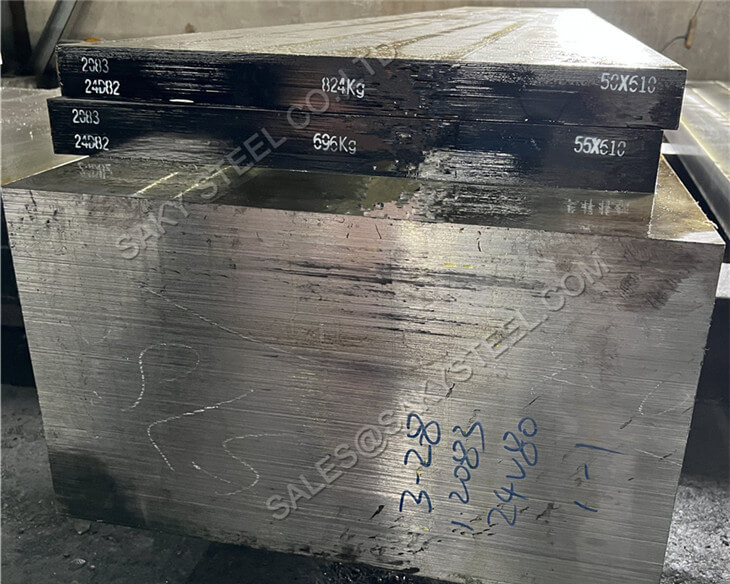
DIN 1.2738 P20+Ni mold steel plate offers uniform pre-hardened hardness, good machinability and polishability for large plastic injection molds. Custom cutting, machining allowance, UT, MTC and EN 10204 3.1 are available when specified.
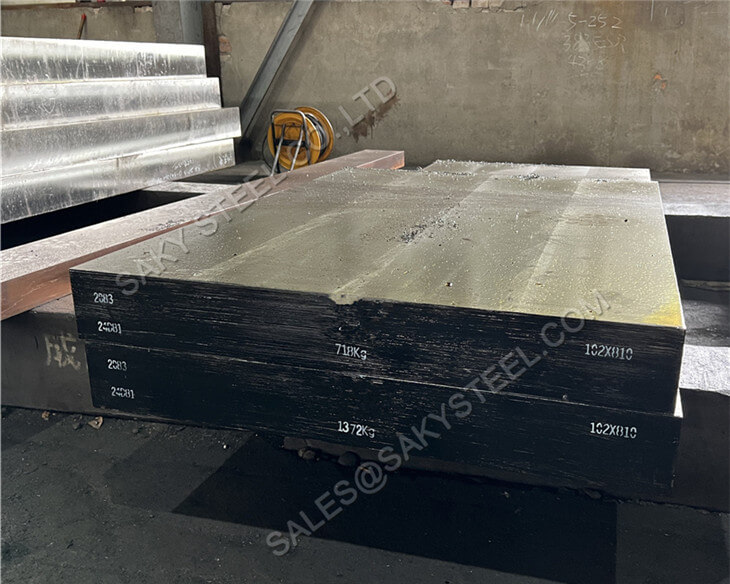
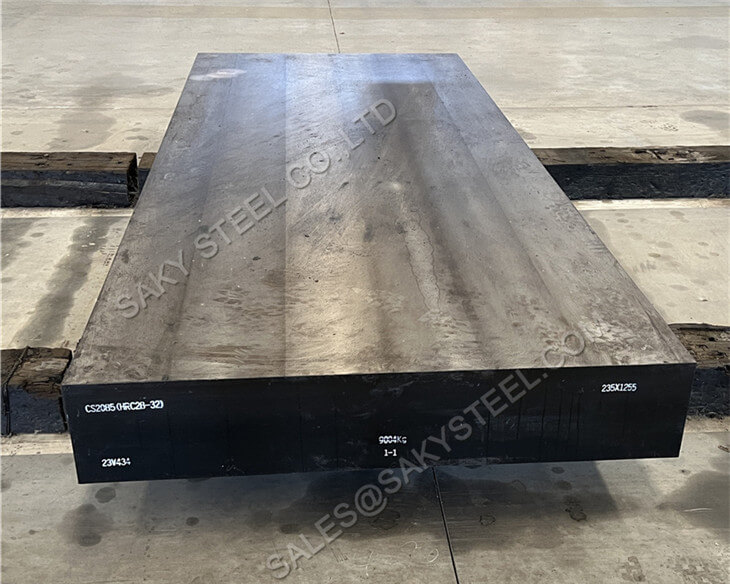
DIN 1.2738 P20+Ni Plastic Mold Steel Plate is a nickel-alloyed, pre-hardened Cr-Mn-Mo tool steel commonly identified as 40CrMnNiMo8-6-4. It is supplied as plate, block and rectangular mold blank with good through-hardness uniformity, machinability, toughness and polishing performance for large plastic injection molds, blow molds and extrusion tooling.
SAKY STEEL supplies 1.2738 mold steel plate in pre-hardened condition with black, milled, machined, ground or polished surfaces. Thickness, width, length, machining allowance, flatness, cutting and rough machining can be discussed according to customer drawings. MTC, EN 10204 3.1, dimensional reports, hardness testing and ultrasonic testing are available when specified.
Product Parameters
| Item | Product Details |
|---|---|
| Product Name | DIN 1.2738 P20+Ni Plastic Mold Steel Plate |
| Grade | 1.2738 / P20+Ni |
| EN Designation | 40CrMnNiMo8-6-4 |
| Material Family | Pre-hardened plastic mold tool steel |
| Product Shape | Plate, rectangular block and mold blank |
| Regular Production Size | Approximately 20–300 mm thickness |
| Made-to-Order Size | Thicker forged blocks subject to technical review |
| Width and Length | Custom plate size or saw-cut mold blank |
| Surface Finish | Black, milled, machined, ground or polished |
| Delivery Condition | Pre-hardened and tempered |
| Typical Hardness | Approximately 290–330 HB |
| Standard | DIN EN ISO 4957 or agreed specification |
| Tolerance | Mill, machined or drawing-specific tolerance |
| Available Services | Saw cutting, milling, grinding and rough machining |
| Certificates | MTC, EN 10204 3.1 and inspection reports |
Chemical Composition
DIN 1.2738 is based on a chromium-manganese-molybdenum mold steel composition with approximately 1% nickel. Nickel improves through-hardening response and helps maintain more uniform mechanical properties in large mold sections.
| Element | Typical Reference Content | Technical Function |
|---|---|---|
| Carbon | Approximately 0.35–0.45% | Provides strength and hardness response |
| Silicon | Approximately 0.20–0.40% | Supports deoxidation and matrix strength |
| Manganese | Approximately 1.20–1.60% | Improves hardenability and strength |
| Chromium | Approximately 1.80–2.10% | Supports hardenability, wear resistance and tempering response |
| Molybdenum | Approximately 0.15–0.25% | Improves hardenability and temper resistance |
| Nickel | Approximately 0.90–1.20% | Improves toughness and through-hardness uniformity |
| Phosphorus | Controlled maximum | Restricted to support toughness and polishability |
| Sulfur | Controlled maximum | Restricted where high polishing quality is required |
| Iron | Balance | Base metal matrix |
Actual chemical composition shall be confirmed by the applicable product specification and MTC.
Mechanical and Key Technical Properties
The principal benefit of 1.2738 plate is that it is supplied pre-hardened, allowing the mold maker to machine the plate without a final through-hardening cycle in many applications. This reduces heat-treatment distortion risk and shortens mold-manufacturing time.
| Property | Typical Reference | Condition | Engineering Significance |
|---|---|---|---|
| Hardness | Approximately 290–330 HB | Pre-hardened | Suitable for direct mold machining |
| Tensile Strength | Approximately 950–1100 MPa | Typical at room temperature | Supports large mold structures |
| Yield Strength | Approximately 800–950 MPa | Typical at room temperature | Helps resist mold deformation |
| Toughness | Good for pre-hardened mold steel | Section dependent | Supports large cavities and complex geometry |
| Machinability | Good | Pre-hardened condition | Allows direct rough and finish machining |
| Polishability | Good to very good | Clean steel and proper machining required | Suitable for many visible plastic parts |
| Photo-Etching Response | Generally suitable | Surface preparation dependent | Supports textured plastic mold surfaces |
| Density | Approximately 7.85 g/cm³ | Room temperature | Used for plate-weight calculations |
Common Size Table
| Thickness | Width | Length | Surface | Typical Processing |
|---|---|---|---|---|
| 20–50 mm | Up to about 2000 mm | Custom cut length | Black or milled | Mold inserts and support plates |
| 55–100 mm | Custom width | Custom cut length | Milled or ground | Injection mold plates |
| 105–160 mm | Custom width | Saw-cut blank | Machined | Large mold cavities and cores |
| 165–250 mm | Made to order | Project specific | Rough machined | Automotive and appliance molds |
| Above 250 mm | Forged block size | Made to order | Forged and machined | Very large mold blocks |
Different Specifications Comparison
Plate Surface and Processing Comparison
| Condition | Main Feature | Recommended Use | Purchase Advice |
|---|---|---|---|
| Black Plate | Mill surface with machining allowance | Heavy rough machining | Specify minimum finished size |
| Saw-Cut Block | Custom rectangular blank | CNC mold production | State saw-cut tolerance and allowance |
| Milled Plate | Improved dimensional consistency | Mold bases and cavity blocks | Specify six-side or two-side milling |
| Ground Plate | Tight thickness and flatness control | Precision mold components | State flatness, parallelism and roughness |
| Polished Surface | Prepared for optical or decorative mold surfaces | Visible plastic components | Confirm required polish class |
Comparison with Related Plastic Mold Steels
| Grade | Main Strength | Relative Limitation | Typical Selection |
|---|---|---|---|
| 1.2311 / P20 | Good machinability and common availability | Less through-hardness uniformity in very thick blocks | Medium-size plastic molds |
| 1.2738 / P20+Ni | Better hardenability and large-section uniformity | Moderate wear and corrosion resistance | Large injection and blow molds |
| 1.2312 | Improved machinability through sulfur addition | Lower polishability and transverse toughness | Machined mold bases and holders |
| 1.2316 | Higher corrosion resistance | Different machining and heat-treatment behavior | Corrosive plastics and humid mold service |
Equivalent Standards and International Names
| System | Designation | Relationship |
|---|---|---|
| European Material Number | 1.2738 | Primary material number |
| EN Designation | 40CrMnNiMo8-6-4 | European chemical designation |
| Commercial Name | P20+Ni / P20 Nickel | Common commercial reference |
| French Reference | 35CND7 | Common cross-reference |
| Commercial Brand Reference | Impax Supreme / 718 type | Commercial family reference only |
| Product Standard | DIN EN ISO 4957 | Tool-steel designation reference |
Production Process Flow
Steelmaking materials are selected according to the required 1.2738 chemistry.
Chemistry, cleanliness and gas content are controlled during melting.
Ingots or continuous-cast billets are produced for further reduction.
The material is reduced into plate or large mold-block form.
Quenching and tempering develop the specified delivery hardness.
Scale removal, milling, grinding or rough machining is completed.
Hardness, dimensions, surface and internal soundness are checked.
Heat-number traceability is maintained through shipment preparation.
Product Inspection
| Inspection | Method | Purpose |
|---|---|---|
| Chemical Analysis | Laboratory spectrometric analysis | Confirm 1.2738 alloy composition |
| Hardness Testing | Brinell or equivalent method | Verify pre-hardened delivery condition |
| Dimensional Inspection | Thickness, width and length measurement | Confirm ordered plate size and tolerance |
| Flatness and Parallelism | Straightedge, gauge or precision equipment | Verify suitability for mold machining |
| Surface Inspection | Visual and finish examination | Identify scale, laps, cracks or handling damage |
| Ultrasonic Testing | UT to the agreed acceptance level | Evaluate internal soundness when specified |
| Roughness Testing | Surface roughness measurement | Available for ground or machined surfaces |
| Traceability Review | Heat number and document verification | Link the plate to MTC and EN 10204 3.1 |
| Third-Party Inspection | SGS, BV, TÜV or nominated inspector | Available when specified |
Product Packaging
Machined plates can be coated with protective oil and moisture-resistant film.
Paper, foam and separators reduce contact damage between plates.
Ground or milled edges can receive corner guards and padded protection.
Export pallets, skids or wooden cases are selected according to size and weight.
Grade, heat number, size and customer-specified shipping marks are retained.


Applications, Performance and Fabrication
Primary Applications
- Large plastic injection molds
- Automotive bumper, dashboard and trim molds
- Household appliance housing molds
- Blow molds for large plastic containers
- Plastic extrusion dies and tooling
- Mold cores, cavities and backing blocks
- Compression molds for non-abrasive plastics
- Large mold bases requiring improved through-hardness uniformity
Machinability
Machinability is good for a pre-hardened tool steel, allowing cavity milling, drilling, boring and tapping without first soft annealing the entire block. Rigid machines, carbide tooling, stable feeds and effective chip removal are recommended for thick mold blocks.
Polishing and Photo-Etching
1.2738 can provide good polished and textured surfaces when the steel has suitable cleanliness and the machining sequence avoids decarburized or damaged layers. The required polish level should be stated before ordering, particularly for visible automotive or appliance parts.
Welding
Repair welding and engineering modifications are possible with a qualified procedure. Preheating, compatible filler metal, controlled interpass temperature and slow cooling are normally required to reduce cracking and hardness variation around the repaired area.
Nitriding and Surface Hardening
Nitriding may be used to increase local surface hardness and wear resistance while retaining the tough pre-hardened core. Flame or induction hardening may also be considered for localized surfaces, but the process must be evaluated against mold geometry and distortion risk.
Application Limitations
1.2738 is not a stainless mold steel and does not provide strong resistance to corrosive plastics, aggressive cooling water or continuously humid storage. Highly abrasive, glass-filled plastics may also require a higher-wear tool steel or a suitable surface treatment.
Why Choose SAKY STEEL?
Thickness, width, length and machining allowance can be supplied according to drawings.
Saw cutting, milling, grinding and rough cavity machining can be discussed.
Material identification can be maintained from mill documentation through packing.
MTC and EN 10204 3.1 documentation can be provided according to the order.
Hardness, dimensional, roughness and UT inspection can be arranged when specified.
Protected pallets, skids, wooden cases and customized shipping marks are available.
FAQ
What is DIN 1.2738 mold steel?
DIN 1.2738 is a nickel-alloyed pre-hardened plastic mold steel commonly called P20+Ni. It is designed for good machinability, toughness and more uniform hardness in large mold sections.
What hardness is 1.2738 normally supplied at?
A common supply range is approximately 290–330 HB. The actual hardness range, measurement positions and permitted variation should be defined by the order specification and confirmed by the MTC.
What is the difference between 1.2738 and P20?
1.2738 is commonly described as P20+Ni because it contains additional nickel compared with basic P20-type steel. The nickel improves hardenability and makes it more suitable for thick mold blocks requiring better hardness uniformity.
Can 1.2738 be polished for visible plastic parts?
Yes, properly produced and processed 1.2738 can provide good polishing and photo-etching results. The inquiry should state the required polish or texture level so that suitable steel quality and surface preparation can be selected.
Can 1.2738 plate be nitrided?
Nitriding can be applied to improve local surface hardness and wear resistance. The nitriding temperature and process must be selected to avoid unwanted softening or dimensional changes in the pre-hardened base material.
Is ultrasonic testing available for thick mold blocks?
Yes. UT can be arranged for thick plates and forged mold blocks when specified. The purchase order should state the test standard, acceptance level, scanning coverage and report requirements.
Can SAKY STEEL provide custom-machined mold blanks?
Saw-cut, milled, ground and rough-machined blanks can be discussed according to the drawing. Final dimensions, machining allowance, flatness, parallelism and surface requirements should be included in the inquiry.
Can MTC and EN 10204 3.1 be provided?
MTC, heat-number traceability and EN 10204 3.1 documentation can be provided according to the purchase order. Additional hardness, dimensional, roughness or UT reports may also be arranged.