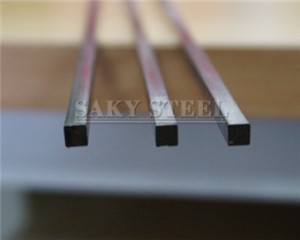
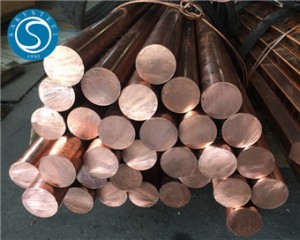
AMS 6514 Maraging 300 Steel UNS K93160 Round Bar
Short Description:
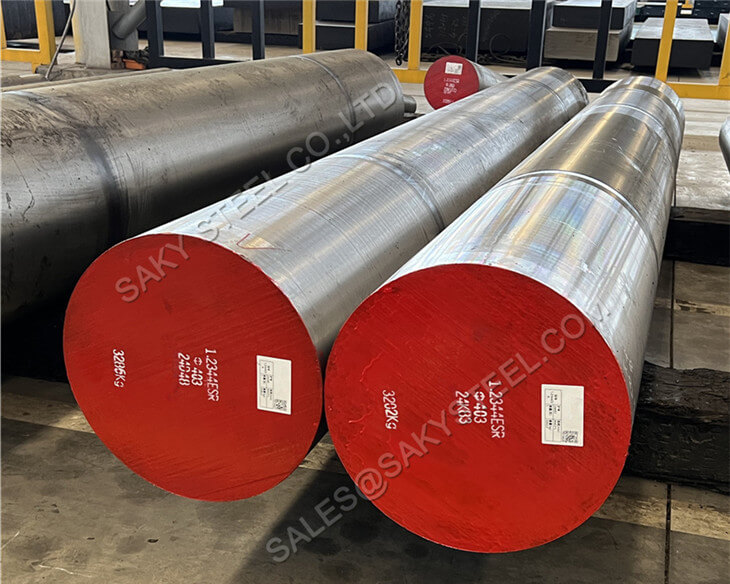
AMS 6514 Maraging 300 Steel Bar UNS K93160 provides ultra-high aged strength, good toughness and low heat-treatment distortion for aerospace shafts and tooling. Round bars support custom diameters, finishes, cutting, MTC and EN 10204 3.1.
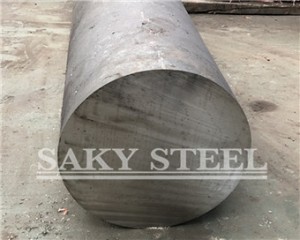
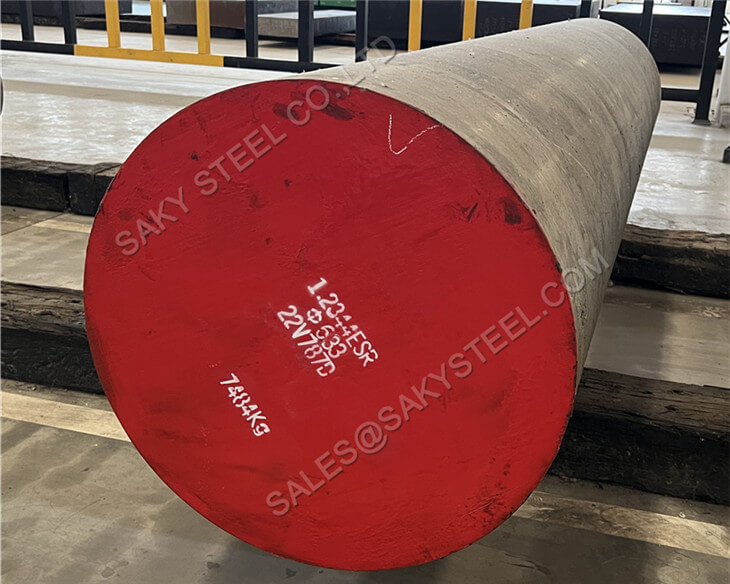
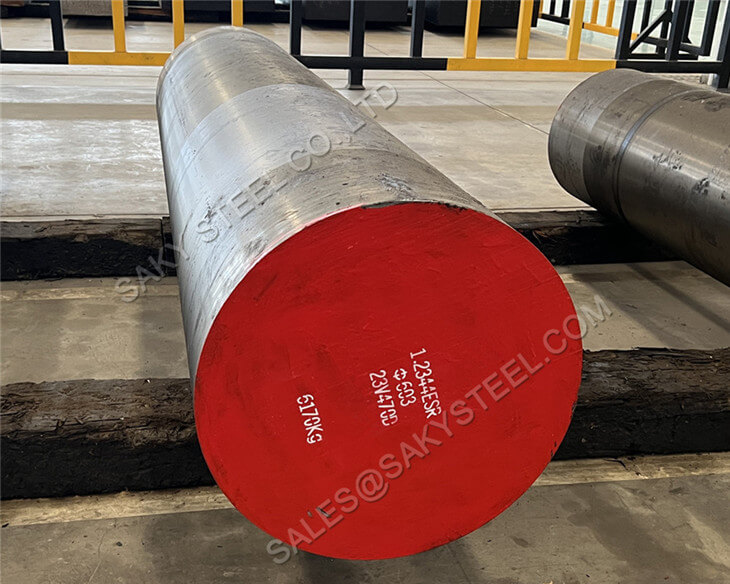
Maraging 300 Steel Bar, also known as C300, 18Ni300, UNS K93160 and W.Nr. 1.6354, is a low-carbon, nickel-cobalt-molybdenum maraging steel supplied as round bar for aerospace, rocket, high-strength shaft and precision tooling applications. It develops ultra-high strength by precipitation aging of a tough nickel-martensitic matrix rather than by conventional high-carbon quench hardening.
SAKY STEEL supplies AMS 6514 Maraging 300 round bar in solution-annealed or specified aged condition. Available processing may include saw cutting, peeling, rough turning, centerless grinding and machining. Diameter, length, tolerance, melting route, surface condition, heat treatment and inspection requirements should be clearly stated in the purchase inquiry.
Product Parameters
| Item | Product Details |
|---|---|
| Product Name | Maraging 300 Steel Round Bar |
| Grade | Maraging 300 / C300 / 18Ni300 |
| UNS Designation | UNS K93160 |
| European Reference | W.Nr. 1.6354 / X2NiCoMo18-9-5 |
| Material Family | 18% nickel cobalt-molybdenum maraging steel |
| Product Shape | Round bar and forged round bar |
| Regular Production Size | Approximately Ø10–250 mm |
| Made-to-Order Size | Larger forged sizes subject to technical review |
| Length | 1000–6000 mm or cut to length |
| Surface Finish | Black, peeled, rough turned or ground |
| Delivery Condition | Solution annealed or aged when specified |
| Standard | AMS 6514 |
| Tolerance | AMS tolerance, h9, h11 or drawing-specific |
| Available Services | Cutting, peeling, turning, grinding and machining |
| Certificates | MTC, EN 10204 3.1 and inspection reports |
Chemical Composition
Maraging 300 is an extremely low-carbon iron-nickel alloy strengthened primarily through cobalt, molybdenum, titanium and aluminum additions. Compared with Maraging 250, the C300 grade generally contains more cobalt and titanium to obtain a higher precipitation-hardening response.
| Element | Typical Content, wt.% | Technical Function |
|---|---|---|
| Nickel | 18.00–19.00 | Forms the tough nickel-martensitic matrix |
| Cobalt | 8.50–9.50 | Accelerates and strengthens the aging response |
| Molybdenum | 4.60–5.20 | Forms strengthening intermetallic precipitates |
| Titanium | 0.55–0.80 | Raises aged strength and hardness |
| Aluminum | 0.05–0.15 | Supports precipitation hardening |
| Carbon | 0.03 maximum reference | Kept low to preserve toughness and weldability |
| Manganese | 0.10 maximum reference | Controlled residual element |
| Silicon | 0.10 maximum reference | Restricted for premium alloy cleanliness |
| Phosphorus | 0.010 maximum reference | Restricted to support toughness |
| Sulfur | 0.010 maximum reference | Restricted to minimize inclusions |
| Iron | Balance | Base metal matrix |
Actual chemical composition shall be confirmed by the applicable product specification and MTC.
Mechanical and Heat-Treatment Properties
Maraging 300 is generally supplied in a solution-annealed condition suitable for machining and fabrication. Subsequent aging develops an ultra-high yield-strength level without the oil or water quench normally required by conventional hardened alloy steels.
| Property | Typical Reference | Condition | Engineering Meaning |
|---|---|---|---|
| Tensile Strength | Approximately 2000–2100 MPa | Aged | Provides the nominal 300 ksi strength class |
| Yield Strength | Approximately 1860 MPa minimum reference | Aged | Supports highly stressed aerospace components |
| Elongation | Approximately 4–8% | Aged, size dependent | Retains useful ductility at very high strength |
| Hardness | Approximately 52–56 HRC | Aged | Suitable for high-strength shafts and tooling |
| Annealed Hardness | Approximately 30–35 HRC | Solution annealed | Allows machining before aging |
| Density | Approximately 8.0 g/cm³ | Room temperature | Used for mass calculations |
| Elastic Modulus | Approximately 185–195 GPa | Room temperature | Supports stiffness calculations |
| Solution Treatment | Approximately 815–830°C | Air cooled | Prepares the alloy for machining and aging |
| Typical Aging | About 480°C for approximately 3–6 hours | Air cooled | Develops high precipitation strength with low distortion |
Common Size Table
| Diameter | Length | Surface | Processing | Typical Use |
|---|---|---|---|---|
| Ø10–25 mm | 1000–4000 mm | Peeled or ground | Precision cutting and grinding | Pins, fasteners and actuator parts |
| Ø30–60 mm | 2000–6000 mm | Peeled or turned | Machining and centerless grinding | Drive shafts, gears and tooling |
| Ø65–120 mm | 2000–6000 mm | Rough turned | Saw cutting and rough machining | Landing gear and structural components |
| Ø125–200 mm | Custom cut length | Forged and rough turned | UT and machining when specified | Heavy shafts and aerospace tooling blanks |
| Above Ø200 mm | Made to order | Forged or machined | Project-specific production | Large critical components |
Different Specifications Comparison
Round Bar Surface and Production Comparison
| Condition | Main Feature | Typical Use | Purchase Advice |
|---|---|---|---|
| Hot-Rolled Bar | Economical mill surface with machining allowance | General rough machining | Specify minimum finished diameter |
| Forged Bar | Suitable for larger sections and critical parts | Heavy shafts and tooling blanks | Specify UT and VIM+VAR requirements |
| Peeled Bar | Scale-free surface with improved diameter control | CNC-machined shafts and fasteners | Reduces machining allowance |
| Rough-Turned Bar | Clean surface with controlled allowance | Large structural components | State final diameter and machining allowance |
| Ground Bar | Tight tolerance and smooth finish | Precision shafts and tooling parts | Specify h9, h8 or drawing tolerance |
Comparison with Related Maraging Grades
| Grade | Main Strength | Relative Limitation | Typical Selection |
|---|---|---|---|
| Maraging 200 | Good toughness at lower strength | Lower aged strength | Moderately stressed components |
| Maraging 250 | Balanced strength and toughness | Lower yield strength than C300 | Landing gear, shafts and tooling |
| Maraging 300 | Higher aged yield and tensile strength | Lower toughness margin than C250 | Highly stressed aerospace and rocket parts |
| Maraging 350 | Maximum conventional maraging strength | Higher cost and reduced toughness balance | Special maximum-strength components |
Equivalent Standards and International Names
| System | Designation | Relationship |
|---|---|---|
| Common Name | Maraging 300 / C300 / 18Ni300 | Common commercial designations |
| UNS | K93160 | Common UNS cross-reference |
| SAE Aerospace Standard | AMS 6514 | Primary aerospace bar and forging-stock specification |
| European Material Number | 1.6354 | Common European cross-reference |
| European Name | X2NiCoMo18-9-5 | Common chemical designation |
| Commercial Reference | Vascomax 300 type / V300 type | Commercial family reference only |
| Alternative Online Listing | 1.6358 | Must be verified; not recommended as the primary designation |
Production Process Flow
Low-carbon iron, nickel, cobalt, molybdenum and controlled additions are prepared.
VIM supports precise chemistry and low gas content.
VAR improves cleanliness, soundness and structural uniformity.
Billets are reduced into round-bar or forging-stock form.
The structure is prepared for machining and later aging.
Bars may be peeled, rough turned, descaled or ground.
Chemistry, dimensions, surface and mechanical properties are verified.
Heat-number traceability is retained through export packaging.
Product Inspection
| Inspection | Method | Purpose |
|---|---|---|
| Chemical Analysis | Laboratory spectrometric analysis | Confirm AMS 6514 chemistry |
| PMI | Positive material identification | Reduce alloy-mix risk; not a substitute for full chemistry |
| Tensile Testing | Yield, tensile and elongation testing | Verify specified aged properties |
| Hardness Testing | Rockwell or equivalent testing | Confirm annealed or aged condition |
| Dimensional Inspection | Micrometer, caliper and length measurement | Verify diameter, length and tolerance |
| Surface Inspection | Visual and finish examination | Identify laps, cracks, scale or handling damage |
| Ultrasonic Testing | UT when specified | Evaluate internal soundness |
| Traceability Review | Heat number and document verification | Link the bar to MTC and EN 10204 3.1 |
| Third-Party Inspection | SGS, BV, TÜV or appointed inspector | Available when specified |
Product Packaging
Bars can be protected with oil, VCI paper, film or waterproof wrapping.
Separators and secure bands reduce movement and scratching.
Ground or machined bars can receive end caps or padded protection.
Export cases, skids or pallets are selected according to size and weight.
Grade, heat number, size and customer shipping marks are retained.


Applications, Core Performance and Fabrication
Primary Applications
- Highly stressed aerospace structural components
- Aircraft landing-gear and actuator components
- Rocket and missile structural parts
- Rocket-motor cases and pressure components when qualified
- High-load drive shafts, gears and pins
- Precision dies, mandrels and extrusion tooling
- High-strength fasteners and mechanical components
- Motorsport transmission and powertrain components
Ultra-High Strength
Maraging 300 is designed for components requiring a higher strength level than Maraging 250. Correctly aged material can achieve yield strength near or above 1860 MPa while retaining useful toughness and weldability for an alloy in this strength class.
Machinability
Machinability is generally good in the solution-annealed condition for an ultra-high-strength steel. Major turning, milling, drilling and threading operations are normally completed before final aging. Carbide tooling, rigid equipment, stable feeds and adequate coolant are recommended.
Weldability
The very low carbon content provides useful weldability compared with conventional ultra-high-strength quenched steels. Welding procedure qualification, filler selection, joint cleanliness and post-weld aging must be controlled according to the component design and governing aerospace specification.
Heat Treatment
Maraging 300 is designed for precipitation hardening. It is normally solution annealed and air cooled, machined close to the final dimensions and then aged near 480°C. The aging cycle forms strengthening intermetallic phases with relatively low dimensional change.
Corrosion Protection
Maraging 300 is not stainless steel and should not be selected primarily for corrosion resistance. Protective oil, plating, coating, controlled storage or other surface protection may be required in humid, marine or chemically aggressive environments.
Why Choose SAKY STEEL?
Diameter, length, machining allowance and surface condition can be supplied according to drawings.
Material identification can be maintained from mill documentation through final packing.
MTC (Mill Test Certificate / 质保书) and EN 10204 3.1 can be provided according to the order.
PMI, hardness, tensile, dimensional and ultrasonic testing can be arranged when specified.
Saw cutting, peeling, rough turning and grinding are available subject to size and tolerance.
Protected bundles, wooden cases, pallets and customized shipping marks are available.
FAQ
What is Maraging 300 steel?
Maraging 300 is an ultra-high-strength, very-low-carbon iron-nickel steel containing cobalt, molybdenum, titanium and aluminum. It develops strength by precipitation aging rather than conventional high-carbon martensitic hardening.
What standard applies to Maraging 300 round bar?
AMS 6514 is the principal aerospace specification commonly applied to Maraging 300 bars and forging stock. The revision, product size, melting route, condition and inspection requirements should be stated in the purchase order.
Is Maraging 300 the same as 1.6358?
The commonly referenced European material number for Maraging 300 is 1.6354, together with X2NiCoMo18-9-5. Some market listings use 1.6358, but this designation should be verified against the customer specification before acceptance.
What strength can Maraging 300 achieve?
Correctly aged Maraging 300 commonly reaches approximately 300 ksi tensile-strength class and a minimum yield-strength reference near 270 ksi. Actual guaranteed properties depend on bar diameter, orientation, aging treatment and AMS 6514 requirements.
Can Maraging 300 be machined before aging?
Yes. Major machining is normally completed in the solution-annealed condition, when the material is softer and easier to cut. Final grinding or dimensional correction may be performed after aging when required.
What is the difference between Maraging 250 and Maraging 300?
Maraging 300 develops higher aged strength and hardness than Maraging 250. Maraging 250 is commonly preferred where a greater toughness margin is more important than maximum strength.
Is ultrasonic testing available?
UT can be arranged for suitable bar and forged-bar sizes when specified. The inquiry should state the inspection method, acceptance criteria and reporting requirements.
Can SAKY STEEL provide an MTC?
Yes. MTC, heat-number traceability and EN 10204 3.1 documentation can be provided according to the purchase order. Additional hardness, tensile, dimensional, PMI or UT reports may also be arranged.