DC53 Cold Work Tool Steel Bar
Short Description:
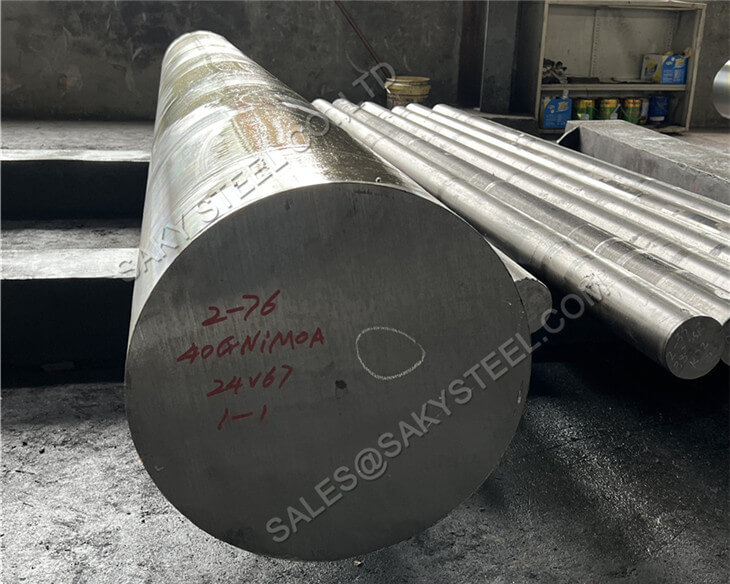
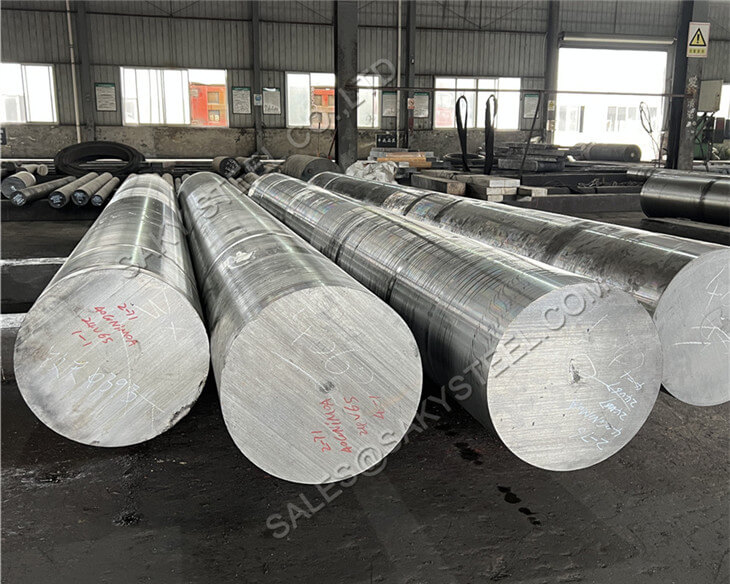
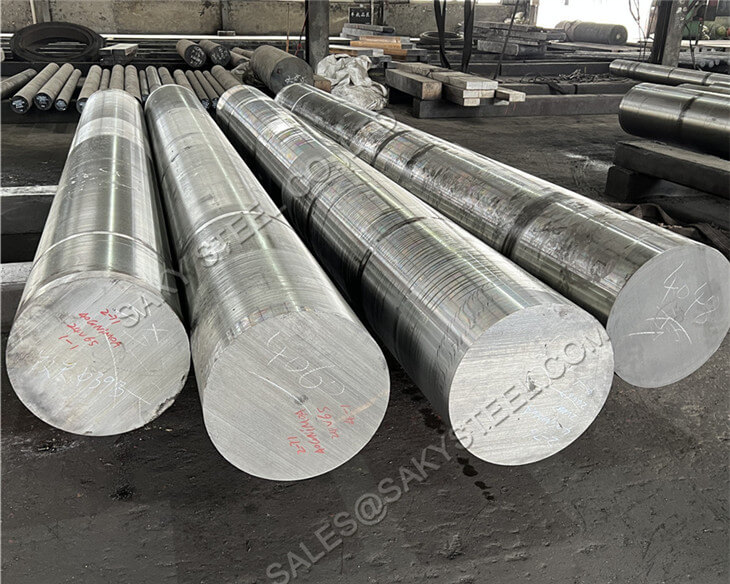
DC53 Cold Work Tool Steel Bar is a high-performance cold work die steel bar developed as an improved D2 / SKD11 tool steel. With excellent toughness, high hardness, good wear resistance, low heat treatment deformation and superior machinability compared with conventional cold work tool steel, DC53 tool steel round bar is widely used for stamping dies, punches, blanking dies, cold forging dies, forming tools, shear blades, gauges, precision molds and industrial cutting tools. SAKY STEEL supplies DC53 steel bars, round rods, flat bars and forged bars with customized size, surface finish, MTC, EN 10204 3.1 certificate, UT inspection and export-standard packaging.
DC53 Cold Work Tool Steel Bar is a high-performance cold work die steel bar developed as an improved SKD11 / D2 tool steel. It offers excellent toughness, high hardness, good wear resistance, low heat treatment deformation and reliable performance for precision dies, punches, molds and industrial cutting tools.
SAKY STEEL supplies DC53 steel bars, DC53 tool steel round bars, DC53 rods, DC53 flat bars, forged bars and cut-to-length tool steel materials in customized diameter, thickness, width, length, tolerance and surface finish. MTC (Mill Test Certificate), EN 10204 3.1 certificate, UT inspection, hardness test, dimensional inspection and third-party inspection can be provided according to project requirements.
Product Parameters
| Item | Details |
|---|---|
| Product Name | DC53 Cold Work Tool Steel Bar / DC53 Tool Steel Round Bar / DC53 Steel Rod |
| Grade | DC53 / SKD11 Modified / D2 Modified / 1.2379 Modified |
| Material Type | High toughness cold work die steel / cold work tool steel |
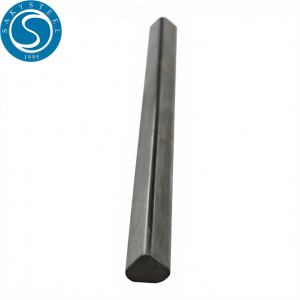
| Shape & Sizes | Round bar, flat bar, square bar, forged bar, steel rod and cut-to-size tool steel block |
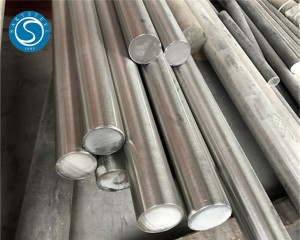
| Common Diameter | Round bar 6 mm – 300 mm; larger forged sizes available upon request |
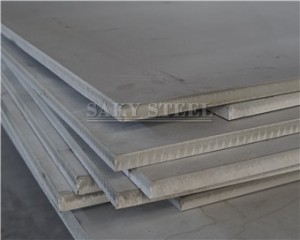
| Flat Bar Size | Thickness 10 mm – 300 mm, width and length customized according to drawing |
| Length | 1000 mm – 6000 mm, cut-to-length available according to customer requirement |
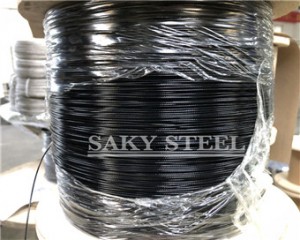
| Surface Finish | Black, bright, peeled, turned, milled, ground, polished |
| Standards | JIS G4404 reference, ASTM A681 reference, customer technical specification |
| Tolerance | Standard tolerance, h9, h11, k12, ground tolerance or customized tolerance |
| Supply Condition | Annealed, pre-machined, rough turned, ground or customer-required condition |
| Certificate | MTC, EN 10204 3.1 certificate, hardness report, UT report and third-party inspection available |
Chemical Composition
The following chemical composition is a typical reference for DC53 cold work tool steel bar. Final values should be confirmed according to the actual Mill Test Certificate.
| Element | Typical Content (%) | Function in DC53 Tool Steel |
|---|---|---|
| Carbon (C) | Approx. 0.95 | Provides hardness, wear resistance and cutting performance after heat treatment |
| Silicon (Si) | Approx. 1.00 | Supports strength, tempering response and steel stability |
| Manganese (Mn) | Approx. 0.40 | Improves hardenability and processing stability |
| Chromium (Cr) | Approx. 8.00 | Improves hardenability, wear resistance and oxidation resistance |
| Molybdenum (Mo) | Approx. 2.00 | Improves toughness, secondary hardening and heat treatment stability |
| Vanadium (V) | Approx. 0.30 | Refines carbide structure and improves wear resistance |
| Phosphorus (P) | Controlled | Controlled impurity for tool steel quality |
| Sulfur (S) | Controlled | Controlled impurity for clean structure and toughness |
Mechanical Properties
DC53 steel bar is usually supplied in annealed condition and then hardened and tempered according to final die or tool requirements. Mechanical properties depend on size, heat treatment, tempering temperature and final working condition.
| Property | Reference Value | Engineering Meaning |
|---|---|---|
| Annealed Hardness | Approx. ≤ 255 HB | Suitable for machining, milling, drilling and tool blank preparation |
| Hardened Hardness | Approx. 58 – 62 HRC | Suitable for dies, punches, blades and high-wear cold work tools |
| Toughness | Higher than conventional SKD11 | Reduces chipping and cracking risk in precision dies |
| Wear Resistance | Good | Supports long tool life in stamping, blanking and forming tools |
| Dimensional Stability | Good after proper heat treatment | Useful for precision molds and low-deformation die applications |
| Machinability | Better than many high-carbon high-chrome die steels | Supports CNC machining and precision tool manufacturing |
| Heat Treatment Response | Excellent secondary hardening response | Suitable for high hardness and high toughness tool applications |
Common Size Table
| Product Form | Common Size | Surface Finish | Typical Use |
|---|---|---|---|
| DC53 Round Bar | Ø6 – Ø50 mm × 1000 – 6000 mm | Bright, peeled, ground | Punches, small dies, guide parts, precision tools |
| DC53 Round Bar | Ø55 – Ø150 mm × 2000 – 6000 mm | Black, peeled, rough turned | Cold work die parts, forming tools, machine knives |
| DC53 Forged Bar | Ø160 – Ø300 mm or customized | Forged, rough turned, machined | Large tool blocks, heavy-duty molds, die inserts |
| DC53 Flat Bar | Thickness 10 – 100 mm, width customized | Black, milled, ground | Blanking dies, stamping dies, shear blades, plates |
| DC53 Tool Steel Block | Cut-to-size according to drawing | Milled, ground, pre-machined | Precision molds, inserts, punches and die components |
Different Specifications Comparison
| Material / Form | Main Feature | Recommended Application | Selection Advice |
|---|---|---|---|
| DC53 Round Bar | High toughness, good wear resistance and machinability | Punches, dies, cutting tools, precision parts | Recommended for most DC53 bar machining requirements |
| DC53 Flat Bar | Good for plate-type dies and blanking tools | Stamping dies, shear blades, forming plates | Recommended when flat geometry is required |
| DC53 Forged Bar | Better for larger sections and critical die parts | Large dies, mold blocks, heavy-duty cold work tools | Recommended for large size or high-load tooling |
| DC53 vs SKD11 | DC53 offers improved toughness and machining behavior | Precision dies, difficult blanking and chipping-prone tools | Choose DC53 when SKD11 chipping is a concern |
| DC53 vs D2 | DC53 is often used as D2 modified cold work steel | Cold work tooling with higher toughness demand | Choose by hardness, wear resistance and impact load |
| DC53 vs DIN 1.2360 | Different cold work steel grades | Need drawing confirmation | Do not substitute without customer approval |
Equivalent Standards and International Names
| Name / Standard | Designation | Remarks |
|---|---|---|
| Trade Grade | DC53 | Cold work die steel developed as improved SKD11 / D2 type |
| JIS Reference | SKD11 Modified | Not identical SKD11, but commonly compared with SKD11 |
| AISI Reference | D2 Modified | Used as improved D2-type cold work tool steel reference |
| DIN Reference | 1.2379 Modified | Common reference for D2 / SKD11 modified family |
| Keyword Note | DIN 1.2360 | DIN 1.2360 is X48CrMoV8-1-1, not the same as DC53 |
| Material Family | Cold Work Tool Steel | Used for cold forming, cutting, stamping and die applications |
| Common Product Forms | Round bar, flat bar, square bar, forged bar, block | Different forms for mold and tool manufacturing |
Production Process Flow
| Step | Process | Quality Control Focus |
|---|---|---|
| 1 | Raw Material Selection | Check steel grade, heat number and raw material traceability |
| 2 | Melting / Refining | Control C, Cr, Mo, V and impurity elements |
| 3 | Ingot / Billet Preparation | Ensure suitable billet quality and internal structure |
| 4 | Hot Rolling / Forging | Control bar size, forging ratio and internal quality |
| 5 | Annealing | Reduce hardness and improve machinability before tool manufacturing |
| 6 | Straightening / Cutting | Control straightness, length and machining allowance |
| 7 | Peeling / Turning / Milling / Grinding | Improve surface finish and dimensional tolerance |
| 8 | Inspection and Testing | Chemical analysis, hardness, UT, dimension and surface inspection |
| 9 | Marking and Traceability | Mark grade, heat number, size and batch information |
| 10 | Packaging and Shipment | Export wooden case, bundle packing, label and shipping mark |
Product Inspection
| Inspection Item | Inspection Method | Purpose |
|---|---|---|
| Chemical Composition | Spectrometer analysis / laboratory test | Confirm DC53 tool steel grade and alloy elements |
| Hardness Test | HB / HRC testing according to supply condition | Verify annealed hardness or heat-treated hardness |
| Ultrasonic Testing | UT inspection if required | Check internal defects for critical bars and forged blocks |
| Dimension Inspection | Caliper, micrometer, straightness inspection | Confirm diameter, thickness, width, length and tolerance |
| Surface Inspection | Visual inspection and surface quality check | Check cracks, pits, scratches, decarburization and surface defects |
| Mechanical Test | Tensile, impact or customer-defined test if required | Support tool steel engineering and project acceptance |
| Third-Party Inspection | SGS, BV, TUV or customer-appointed inspection | Provide independent verification for project orders |
| Certificate | MTC / EN 10204 3.1 / UT report | Ensure material traceability and technical documentation |
Product Packaging
| Packaging Item | Details | Benefit |
|---|---|---|
| Surface Protection | Anti-rust oil, plastic film, anti-rust paper or protective wrapping | Protects tool steel surface during storage and transportation |
| Bundle Packing | Bars bundled with steel strips or protective belts | Prevents movement, bending and collision |
| Wooden Case / Wooden Pallet | Export-standard wooden case or pallet | Suitable for long-distance sea, air and truck shipment |
| Edge Protection | Edge and corner protection for flat bars or blocks | Reduces edge damage during loading and unloading |
| Labeling | Grade, size, heat number, quantity, net weight and customer mark | Improves material traceability after delivery |
| Document Support | Packing list, invoice, MTC, EN 10204 3.1 certificate and UT report if required | Supports customs clearance and project acceptance |


Applications & Machinability
Applications
| Industry | Typical Parts | Why DC53 Tool Steel Bar Is Used |
|---|---|---|
| Medical Instruments | Precision stamping dies, surgical tool molds, cutting and forming tools | High hardness, good toughness and dimensional stability support precision tooling |
| Aerospace | Precision forming dies, cutting tools, punches and special tooling | Improved toughness helps reduce chipping in demanding tool applications |
| Marine Hardware | Cold forming dies, trimming tools, blades and wear-resistant tooling | Good wear resistance and high hardness support long tool service life |
| Chemical Processing | Mold tools, cutting knives, forming dies and wear-resistant components | Suitable for tool and die parts; corrosion environment should be evaluated separately |
| Tooling & Die Manufacturing | Blanking dies, punches, cold forging dies, forming dies, gauges, shear blades | DC53 combines high hardness, toughness, wear resistance and low heat treatment deformation |
Machinability, Welding and Heat Treatment
| Processing Property | Performance | Recommendation |
|---|---|---|
| Machinability | Good in annealed condition; easier to process than many high-chrome cold work steels | Machine in annealed condition before final hardening whenever possible |
| Cutting / Grinding | Suitable for milling, drilling, wire cutting, EDM and grinding | Control grinding heat and allow enough machining allowance for precision tools |
| Welding Performance | Welding is not the preferred process for tool steel and may cause cracking or hardness change | Use preheating, proper filler and post-weld heat treatment if welding is unavoidable |
| Heat Treatment | Suitable for quenching and tempering to high hardness | Heat treatment should follow die design, required hardness and dimensional control target |
| Tempering | Can be tempered to balance hardness and toughness | Select tempering temperature according to final tool life and chipping resistance |
| Surface Treatment | Can be used with nitriding, coating or polishing in suitable applications | Confirm final surface treatment according to die working condition |
Why Choose SAKY STEEL?
| Advantage | Description |
|---|---|
| Professional Steel Bar Supply | SAKY STEEL supplies stainless steel bars, tool steel bars, alloy steel bars, mold steel, cold work tool steel and customized steel materials for global industrial customers. |
| Customized Size Capability | Diameter, thickness, width, length, surface finish, tolerance, cutting service and machining allowance can be customized according to customer drawings. |
| Strict Quality Control | Material traceability, heat number control, hardness test, UT inspection, dimensional inspection, surface inspection and third-party inspection can be arranged. |
| Certificate Support | We can provide MTC (Mill Test Certificate / 质保书), EN 10204 3.1 certificate, UT report, hardness report, inspection report and other quality documents according to order requirements. |
| Export Packaging Experience | Export wooden cases, wooden pallets, protective wrapping, anti-rust oil and clear labels help ensure safe delivery for international shipments. |
| Technical Service Support | Our team can support grade selection, equivalent standard checking, heat treatment discussion, machining allowance confirmation and technical document preparation before shipment. |
FAQ
Q1: What is DC53 Cold Work Tool Steel Bar?
DC53 Cold Work Tool Steel Bar is a high-performance cold work die steel bar developed as an improved SKD11 / D2 type tool steel. It is used for stamping dies, punches, blanking dies, forming dies, cutting tools, shear blades, gauges and precision molds.
Q2: Is DC53 the same as DIN 1.2360?
No. DC53 is generally treated as SKD11 modified / D2 modified / 1.2379 modified cold work tool steel. DIN 1.2360 is X48CrMoV8-1-1, a different cold work tool steel. The exact grade should be confirmed before ordering.
Q3: What is the main advantage of DC53 over SKD11 or D2?
DC53 offers improved toughness, good wear resistance, high hardness, better machinability and lower heat treatment deformation compared with many conventional high-carbon high-chromium cold work steels.
Q4: What hardness can DC53 reach after heat treatment?
DC53 can generally reach around 58 – 62 HRC after proper quenching and tempering. Final hardness depends on tool size, heat treatment process and application requirements.
Q5: Can SAKY STEEL provide DC53 Bar with MTC?
Yes. SAKY STEEL can provide MTC (Mill Test Certificate / 质保书), EN 10204 3.1 certificate, hardness report, UT report, PMI report and third-party inspection documents according to customer requirements.
Q6: What sizes of DC53 Tool Steel Bar are available?
Common DC53 round bar diameters range from 6 mm to 300 mm. Flat bar, square bar, forged bar and cut-to-size tool steel blocks can also be supplied according to drawings.
Q7: Is DC53 easy to machine?
DC53 has good machinability in annealed condition and is often easier to process than many traditional high-chromium cold work die steels. It is recommended to complete most machining before final hardening.
Q8: Can DC53 be welded?
Welding is not usually preferred for DC53 tool steel because of cracking and hardness change risk. If welding is required, preheating, suitable filler and post-weld heat treatment should be considered.
Q9: What applications use DC53 Cold Work Tool Steel Bar?
DC53 Bar is used for stamping dies, blanking dies, punches, cold forging dies, forming tools, shear blades, gauges, precision molds, cutting tools and wear-resistant cold work tooling components.
Q10: How can I get a quotation for DC53 Tool Steel Bar?
Please send your required grade, diameter or flat bar size, length, quantity, surface finish, tolerance, supply condition, heat treatment requirement and certificate requirements to SAKY STEEL. Our team will check availability, production route, delivery time and price for your project.