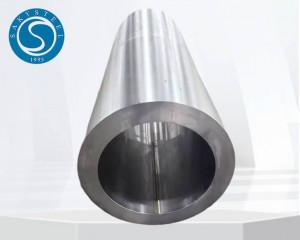
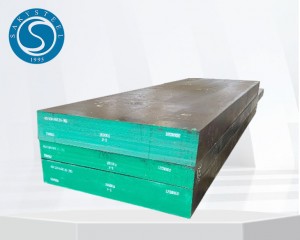
ASTM A681 H21 DIN 1.2581 Hot Work Tool Steel Bar
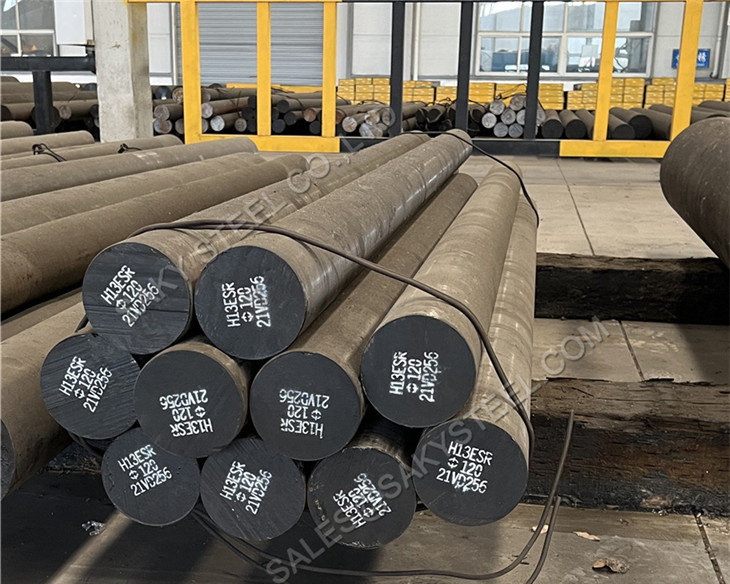
Short Description:
DIN 1.2581 H21 SKD5 hot work tool steel bar offers tungsten-alloyed hot strength, wear resistance and thermal fatigue resistance for forging dies, hot punches and extrusion tooling. Custom diameter, surface, cutting, UT, MTC and EN 10204 3.1 available.
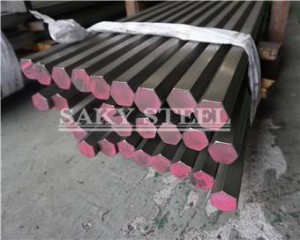
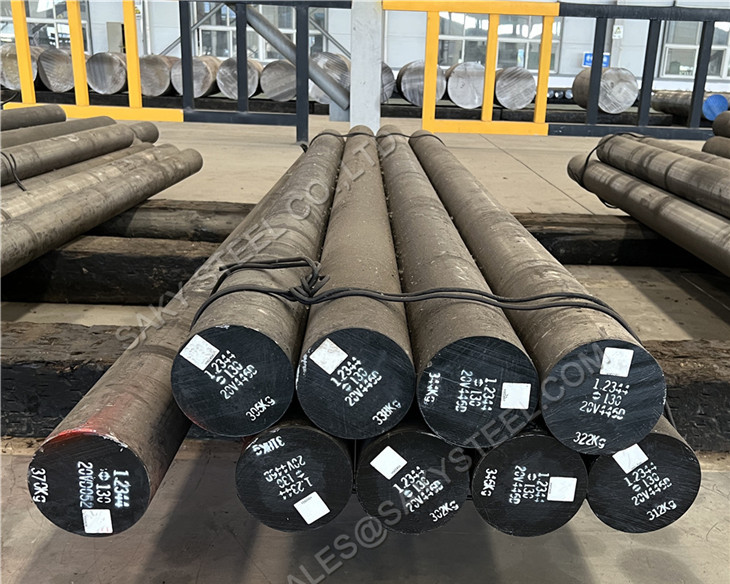
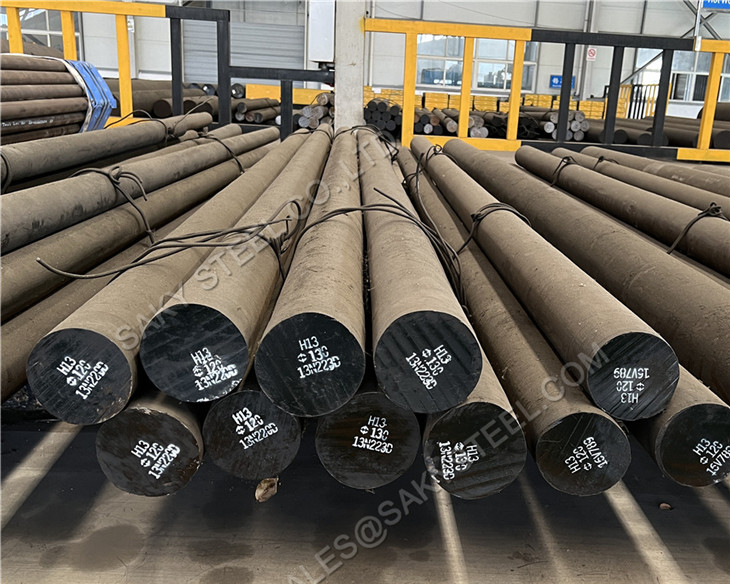
DIN 1.2581 H21 SKD5 Hot Work Tool Steel Bar is a tungsten-alloyed hot work tool steel supplied as round bar or forged bar for hot forging dies, hot punches, extrusion tooling, die casting components, hot shear blades and high-temperature forming tools. It is commonly referenced as AISI H21, UNS T20821, DIN 1.2581, JIS SKD5 and X30WCrV9-3, depending on the applicable standard and market.
SAKY STEEL supplies H21 / 1.2581 tool steel bar in annealed, forged, peeled, turned or ground condition according to order requirements. Available processing may include cutting, peeling, turning, grinding, rough machining, dimensional inspection, hardness testing, ultrasonic testing when specified, MTC and EN 10204 3.1 documentation.
Product Parameters
| Item | Product Details |
|---|---|
| Product Name | DIN 1.2581 H21 SKD5 Hot Work Tool Steel Bar |
| Grade | H21 / 1.2581 / SKD5 |
| UNS / EN Designation | UNS T20821 / X30WCrV9-3 |
| Material Family | Tungsten hot work tool steel |
| Product Shape | Round bar and forged bar |
| Size Range | Regular and custom diameters by order |
| Length | 1000–6000 mm or cut to length |
| Surface Finish | Black, peeled, turned, ground |
| Delivery Condition | Annealed or heat treated when specified |
| Standard | ASTM A681 / DIN EN ISO 4957 |
| Tolerance | Mill, h9, h11 or drawing-specific |
| Available Services | Cutting, peeling, turning, grinding, machining |
| Certificates | MTC, EN 10204 3.1, dimensional report |
Chemical Composition
H21 / 1.2581 is a tungsten-chromium-vanadium hot work tool steel. Its high tungsten content supports hot hardness and resistance to softening at elevated temperature, while chromium and vanadium contribute to hardenability, wear resistance and thermal fatigue performance.
| Element | Typical Reference Content | Technical Function |
|---|---|---|
| Carbon | About 0.26–0.36% | Provides hardenability and working hardness |
| Manganese | About 0.15–0.40% | Supports deoxidation and hardenability |
| Silicon | About 0.15–0.50% | Supports oxidation resistance and matrix strength |
| Chromium | About 3.00–3.75% | Improves hardenability and hot work performance |
| Tungsten | About 8.50–10.00% | Provides red hardness and resistance to softening |
| Vanadium | About 0.30–0.60% | Refines grain and improves wear resistance |
| Phosphorus | Controlled maximum | Restricted to support toughness |
| Sulfur | Controlled maximum | Restricted to limit inclusions and improve tool reliability |
| Iron | Balance | Base metal matrix |
Actual chemical composition shall be confirmed by the applicable product specification and MTC.
Mechanical and High-Temperature Properties
Mechanical and service properties of H21 steel bar depend on bar diameter, heat treatment, working hardness, test direction and service temperature. The following values are typical references for engineering discussion and should not replace order-specific test results.
| Property | Typical Reference | Condition | Engineering Meaning |
|---|---|---|---|
| Annealed Hardness | Usually below about 240–250 HB | Annealed bar | Improves machinability before hardening |
| Working Hardness | About 50–56 HRC reference | Hardened and tempered | Used for hot work tooling applications |
| Tungsten Effect | High red hardness support | Hot work service | Helps retain hardness at elevated temperature |
| Wear Resistance | Good for hot work steel | Heat treated | Useful for hot punches, dies and shear blades |
| Thermal Fatigue Resistance | Application dependent | Repeated heating and cooling | Affected by preheating, cooling and die design |
| Density | About 8.2 g/cm³ reference | Room temperature | Used for bar weight calculation |
| Hardening Temperature | About 1100–1150°C reference | Subject to heat-treatment practice | Must be controlled by qualified procedure |
| Service Temperature | Application dependent | Hot work tooling | Affected by load, time, cooling and oxidation |
Common Size Table
| Diameter | Length | Surface | Processing | Typical Use |
|---|---|---|---|---|
| Ø10–30 mm | 1000–6000 mm | Peeled or ground | Cutting and grinding | Hot punches and small tools |
| Ø35–80 mm | 2000–6000 mm | Peeled or turned | Machining allowance | Mandrels and tooling shafts |
| Ø85–160 mm | Custom cut length | Rough turned | Saw cut or machined | Hot forging die components |
| Ø165–300 mm | Made to order | Forged and turned | UT when specified | Large hot work tooling |
| Above Ø300 mm | Project specific | Forged or machined | Technical review required | Heavy die blocks and inserts |
Different Specifications Comparison
Round Bar Surface and Production Comparison
| Condition | Main Feature | Recommended Use | Purchase Advice |
|---|---|---|---|
| Hot Rolled Bar | Economical mill surface | Rough machining | Specify machining allowance |
| Forged Bar | Suitable for larger sections | Heavy hot work tools | UT may be requested |
| Peeled Bar | Scale-free surface | CNC machining | Reduces surface preparation |
| Turned Bar | Controlled diameter allowance | Tooling blanks | Confirm final machining size |
| Ground Bar | Tight tolerance and smooth finish | Precision tooling components | State h9, h8 or drawing tolerance |
Comparison with Related Hot Work Tool Steels
| Grade | Main Strength | Relative Limitation | Typical Selection |
|---|---|---|---|
| H11 / 1.2343 | Good toughness and heat checking resistance | Lower red hardness than tungsten-rich H21 | General hot work tooling |
| H13 / 1.2344 | Widely used and balanced hot work grade | Different alloy balance and hot hardness | Die casting and extrusion tools |
| H21 / 1.2581 | High tungsten red hardness and wear resistance | Lower toughness margin than some lower-alloy grades | Hot punches, mandrels and forging dies |
| H10 / 1.2365 | Good hot strength and thermal fatigue balance | Less tungsten hot hardness than H21 | Hot punches and forging tools |
Equivalent Standards and International Names
| System | Designation | Relationship |
|---|---|---|
| AISI / ASTM | H21 | Common hot work tool steel grade |
| UNS | T20821 | UNS designation for H21 type steel |
| DIN / W.Nr. | 1.2581 | German material number |
| EN Name | X30WCrV9-3 | Common European chemical designation |
| JIS | SKD5 | Japanese cross-reference |
| Chinese Reference | 3Cr2W8V | Common Chinese hot work tool steel reference |
| Product Standard | ASTM A681 / DIN EN ISO 4957 | Tool steel specification references |
Production Process Flow
Alloying materials are selected according to the required H21 chemistry.
Chemistry, cleanliness and residual elements are controlled during melting.
Ingot or billet quality is prepared for hot working.
The material is reduced into round bar or forged bar form.
Annealing improves machinability before final tool manufacturing.
Bars may be peeled, turned, ground or cut to size.
Dimensions, surface, hardness and documentation are checked.
Heat-number marking and export packing are prepared.
Product Inspection
| Inspection | Method | Purpose |
|---|---|---|
| Chemical Analysis | Laboratory analysis or MTC review | Confirm H21 / 1.2581 chemistry |
| PMI | Positive material identification | Available when specified; not a substitute for full chemistry |
| Hardness Test | HB or HRC test as applicable | Confirm annealed or heat-treated condition |
| Dimensional Inspection | Caliper, micrometer and length check | Verify diameter, length and tolerance |
| Surface Inspection | Visual and finish inspection | Check cracks, scale, laps or handling damage |
| Ultrasonic Testing | UT when specified | Evaluate internal soundness in suitable sizes |
| Traceability Review | Heat number and label verification | Link product to MTC and EN 10204 3.1 |
| Third-Party Inspection | SGS, BV, TÜV or nominated inspector | Can be arranged when specified |


Product Packaging
Bars can be protected with oil, VCI paper, film or waterproof wrapping.
Steel straps, separators and padding reduce movement and scratching.
Ground or machined bars can receive end caps or padded protection.
Export packing is selected according to bar diameter, length and weight.
Grade, size, heat number and customer shipping marks can be retained.


Applications, Core Performance and Fabrication
Primary Applications
- Hot forging dies and die inserts
- Hot punches, mandrels and punch holders
- Extrusion dies and extrusion liners
- Die casting tools for selected non-ferrous alloys
- Hot shear blades and trimming tools
- Header dies, ejector discs and hot forming components
High-Temperature Performance
The high tungsten content of H21 supports hot hardness and resistance to softening at elevated temperature. It is selected for tools exposed to hot metal contact, repeated heating and cooling, and wear under high-temperature service. Actual performance depends on temperature, contact pressure, cooling intensity and lubrication.
Machinability
Machinability is generally better in the annealed condition. Major turning, milling, drilling and rough machining are usually completed before hardening and tempering. Because H21 contains a high tungsten level, tooling selection, cutting speed and coolant control should be planned carefully.
Heat Treatment
H21 is normally annealed before machining and then hardened and tempered to the required working hardness. Austenitizing, quenching and tempering parameters must be selected according to section size, furnace atmosphere, target hardness and die geometry. Preheating during service is often important to reduce thermal shock.
Welding and Repair
Repair welding may be possible with a qualified welding procedure, suitable filler metal, preheating and post-weld heat treatment. For critical hot work dies, repair decisions should consider cracking risk, hardness difference, service temperature and remaining tool life.
Why Choose SAKY STEEL?
Diameter, length, surface finish and machining allowance can be supplied according to drawings.
Material identification can be maintained from documentation to final packing.
MTC (Mill Test Certificate / 质保书) can be provided according to the purchase order.
EN 10204 3.1 documentation is available when specified by the order.
Hardness, dimensional, PMI and UT inspection can be arranged when specified.
Bundles, wooden cases, pallets and customer shipping marks can be arranged.
FAQ
What is DIN 1.2581 H21 tool steel?
DIN 1.2581 H21 is a tungsten-alloyed hot work tool steel. It is used for tools working under high temperature, wear and thermal cycling, such as hot forging dies, hot punches and extrusion tooling.
Is H21 the same as SKD5?
H21 and SKD5 are commonly used cross-references for the same type of tungsten hot work tool steel. Final equivalence should still be confirmed by the required standard, chemical composition, heat treatment and inspection requirements.
What standard applies to H21 tool steel bar?
ASTM A681 is commonly referenced for AISI H21 tool steel, while DIN EN ISO 4957 may be used for DIN 1.2581 / X30WCrV9-3. The purchase order should specify the required standard and revision.
What is the main advantage of H21 compared with H13?
H21 contains much higher tungsten, which improves red hardness and resistance to softening in certain high-temperature applications. H13 is more widely used and offers a different balance of toughness, thermal fatigue resistance and availability.
Can H21 bar be supplied ground or peeled?
Yes. Black, peeled, turned and ground surfaces can be discussed according to diameter, tolerance and final machining requirement. Ground bars are suitable where tighter diameter control or improved surface finish is required.
Is ultrasonic testing available for H21 bars?
UT can be arranged for suitable bar diameters and forged bars when specified. The order should define the test method, acceptance level and reporting requirement.
Can MTC and EN 10204 3.1 be provided?
SAKY STEEL can provide MTC and EN 10204 3.1 documentation according to the purchase order. Hardness, dimensional, PMI or UT reports may also be arranged when specified.