SUS630/17-4PH Martensitic Precipitation Hardening Stainless Steel
Short Description:
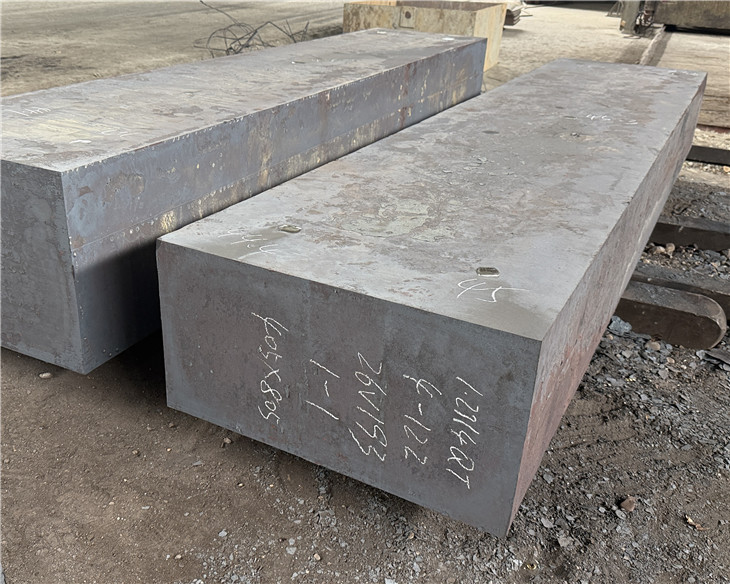
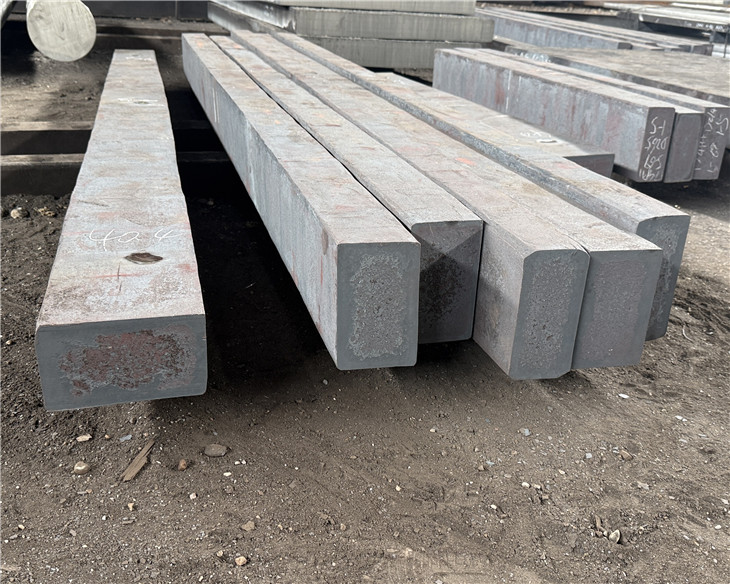
SUS630/17-4PH Martensitic Precipitation Hardening Stainless Steel combines high strength, age-hardening capability and corrosion resistance for mold inserts and precision tooling. ASTM A564 flat bars are available in custom thicknesses, widths, finishes and H900–H1150 conditions.
SUS630/17-4PH Martensitic Precipitation Hardening Stainless Steel is a martensitic precipitation-hardening stainless steel identified as Type 630, UNS S17400, EN 1.4542 and X5CrNiCuNb16-4. It combines high strength, adjustable hardness, good toughness and useful corrosion resistance for plastic molds, precision tooling, offshore equipment and mechanical components.
SAKY STEEL supplies SUS630 / 17-4PH flat bar in solution-treated and age-hardened conditions. Custom thickness, width, length, machined edges, ground surfaces, saw-cut blanks and drawing-based tolerances can be discussed according to the final mold or tooling application. MTC, EN 10204 3.1 and additional inspection reports can be provided according to order requirements.
Product Parameters
| Item | Product Details |
|---|---|
| Product Name | SUS630/17-4PH Martensitic Precipitation Hardening Stainless Steel |
| Grade | SUS630 / 17-4PH / Type 630 |
| UNS Designation | UNS S17400 |
| European Designation | EN 1.4542 / X5CrNiCuNb16-4 |
| Chinese Reference | 05Cr17Ni4Cu4Nb / 0Cr17Ni4Cu4Nb |
| Material Family | Martensitic precipitation-hardening stainless steel |
| Product Form | Flat bar, rectangular bar and mold blank |
| Thickness Range | Approximately 3–200 mm or made to order |
| Width Range | Approximately 10–500 mm or customized |
| Length | 1000–6000 mm or custom cut-to-length |
| Surface Finish | Black, machined, milled, ground or polished |
| Edge Condition | Mill edge, saw-cut edge or machined edge |
| Delivery Condition | Solution treated or precipitation aged |
| Standard | ASTM A564 / ASME SA564 / JIS G4303 |
| Tolerance | Standard tolerance or drawing-specific tolerance |
| Available Services | Saw cutting, milling, grinding and rough machining |
| Certificates | MTC, EN 10204 3.1 and inspection reports |
Chemical Composition
The following composition reflects the controlled reference values shown in the supplied SUS630 / 17-4PH product data. These values should be treated as product-sheet reference values rather than universal ASTM maximum or minimum limits.
| Element | Reference Content (%) | Technical Function |
|---|---|---|
| Carbon (C) | ≤ 0.05 | Controlled to support toughness, corrosion resistance and weldability |
| Silicon (Si) | 0.40 | Acts as a deoxidizing element during melting |
| Manganese (Mn) | 0.60 | Supports deoxidation and melting control |
| Phosphorus (P) | ≤ 0.030 | Restricted to maintain toughness and ductility |
| Sulfur (S) | ≤ 0.010 | Restricted to limit inclusions and improve material integrity |
| Chromium (Cr) | 15.50 | Provides stainless corrosion resistance and surface passivation |
| Nickel (Ni) | 4.10 | Supports toughness and martensitic structure control |
| Copper (Cu) | 3.30 | Produces strengthening precipitates during aging |
| Niobium + Tantalum | 0.25 | Supports precipitation hardening and microstructural stability |
| Iron (Fe) | Balance | Forms the base metal matrix |
Mechanical Properties and Hardness
SUS630 / 17-4PH develops its final strength and hardness through precipitation aging after solution treatment. The reference data supplied for this product indicates hardness above 40 HRC, with a typical aged hardness range of approximately 38–42 HRC.
| Property | Reference Value | Engineering Significance |
|---|---|---|
| Hardness After Aging | Approximately 38–42 HRC | Suitable for high-strength mold and tooling components |
| Product-Sheet Hardness Reference | ≥ 40 HRC | Reference target after the stated aging treatment |
| Strength Level | High, condition dependent | Supports loaded mold inserts, fixtures and mechanical parts |
| Toughness | Good for a precipitation-hardened stainless steel | Helps resist cracking and impact during mold service |
| Wear Resistance | Improved after aging | Useful for mold components subject to sliding contact |
| Corrosion Resistance | Good in atmospheric and mildly corrosive service | Suitable for humid mold environments and selected industrial equipment |
| Magnetic Response | Normally magnetic | Typical of martensitic precipitation-hardening stainless steel |
Actual hardness and mechanical properties depend on flat-bar thickness, solution-treatment condition, aging temperature, aging time and testing position. Guaranteed values must be confirmed by the applicable standard and MTC.
Common Size Table
| Thickness | Width | Length | Typical Surface | Typical Application |
|---|---|---|---|---|
| 3–10 mm | 20–150 mm | 1000–6000 mm | Ground or polished | Thin mold inserts and tooling strips |
| 12–30 mm | 30–250 mm | 1000–6000 mm | Machined or ground | Precision mold components |
| 35–80 mm | 50–400 mm | Custom cut length | Saw cut or machined | Mold cores and support blocks |
| 85–150 mm | Custom width | Custom cut length | Rough machined | Heavy mold components |
| Above 150 mm | Made to order | Project specific | Machined or milled | Large mold blocks and tooling blanks |
Different Specifications Comparison
Surface and Edge Condition Comparison
| Condition | Main Feature | Recommended Use | Purchase Advice |
|---|---|---|---|
| Hot-Rolled Flat Bar | Economical mill surface with machining allowance | General mold and tooling blanks | Specify final minimum thickness and width |
| Saw-Cut Flat Bar | Prepared rectangular blanks with cutting allowance | CNC machining and custom mold parts | State saw-cut tolerance and squareness |
| Milled Flat Bar | Improved flatness and dimensional consistency | Precision mold bases and inserts | Specify machining allowance on all faces |
| Ground Flat Bar | Tight thickness tolerance and smooth surface | Close-tolerance inserts and precision tooling | Specify flatness, parallelism and roughness |
| Polished Flat Bar | Improved appearance and surface cleanliness | Visible tooling and clean-process components | State polishing grade or roughness requirement |
Comparison with Related Mold Materials
| Grade | Main Strength | Relative Limitation | Typical Selection |
|---|---|---|---|
| SUS630 / 17-4PH | High strength with corrosion resistance | Lower wear resistance than D2-type steel | Corrosion-resistant mold inserts and blocks |
| 15-5PH | Good transverse toughness and uniformity | Availability can be more limited | High-integrity tooling and structural parts |
| 420 Stainless | Can achieve relatively high hardness | Greater hardening distortion risk | Wear-oriented stainless mold parts |
| P20 Mold Steel | Good machinability and common mold use | Lower corrosion resistance | General plastic injection molds |
| D2 Tool Steel | Excellent wear resistance | Lower corrosion resistance and toughness balance | Cold-work dies and high-wear tools |
Equivalent Standards and International Names
| System | Designation | Relationship |
|---|---|---|
| JIS Grade | SUS630 | Japanese grade designation |
| Common Trade Name | 17-4PH / PH17-4 | Common commercial designation |
| ASTM Type | Type 630 | Recognized grade designation |
| UNS | S17400 | Unified Numbering System designation |
| EN Material Number | 1.4542 | Common European cross-reference |
| EN Name | X5CrNiCuNb16-4 | European chemical designation |
| Chinese Reference | 05Cr17Ni4Cu4Nb / 0Cr17Ni4Cu4Nb | Common Chinese cross-reference |
| Bar and Shape Standard | ASTM A564 / ASME SA564 | Age-hardening stainless bars and shapes |
| JIS Product Reference | JIS G4303 | Stainless steel bars |
| Aerospace Reference | AMS 5643 | Aerospace bar, wire and forging reference |
Production Process Flow
Controlled alloying materials are prepared according to the required SUS630 chemistry.
The melt is controlled for chromium, nickel, copper and niobium content.
Ingots or billets are produced, with remelting used when required.
The billet is reduced into rectangular bar or flat-bar form.
The material is heated to approximately 1020–1060°C and rapidly cooled.
Aging near 480°C develops high strength and hardness when specified.
The flat bar may be saw cut, milled, ground or polished.
Dimensions, hardness, surface and documentation are verified before packing.
Heat Treatment
Solution Treatment
The supplied reference recommends solution treatment at approximately 1020–1060°C followed by rapid cooling. This treatment places alloying elements into solution and prepares the material for subsequent precipitation aging.
Aging Treatment
A reference aging temperature of approximately 480°C is used to develop copper-rich strengthening precipitates. Under suitable processing conditions, this treatment can produce a hardness level around 38–42 HRC.
Step 1: Solution Heating
Heat the material to approximately 1020–1060°C.
Step 2: Rapid Cooling
Quick cooling is used to retain the solution-treated structure.
Step 3: Aging
Age at approximately 480°C according to the required hardness and specification.
Step 4: Verification
Confirm hardness, dimensions and condition after heat treatment.
Product Inspection
| Inspection | Method | Purpose |
|---|---|---|
| Chemical Analysis | Laboratory or spectrometric analysis | Verify SUS630 / UNS S17400 chemistry |
| PMI | Positive material identification | Reduce grade-mix risk; available when specified |
| Hardness Test | Rockwell hardness testing | Verify the target aged hardness |
| Dimensional Inspection | Caliper, micrometer and length measurement | Verify thickness, width and length |
| Flatness and Parallelism | Straightedge, gauge or precision measurement | Confirm suitability for mold and tooling machining |
| Surface Inspection | Visual and finish examination | Identify cracks, pits, scale or handling damage |
| Ultrasonic Testing | UT for suitable thick flat bars and blocks | Evaluate internal soundness when specified |
| Traceability Review | Heat number and document verification | Link the material to the MTC and EN 10204 3.1 certificate |
| Third-Party Inspection | SGS, BV, TÜV or appointed inspector | Available when specified in the purchase order |
Product Packaging
Finished flat bars can be protected with oil, film, VCI paper or waterproof wrapping.
Machined and ground edges can be protected with foam, paper or corner guards.
Export pallets, skids or wooden cases are selected according to size and weight.
Grade, size, heat number and item identification are retained for traceability.
Packing lists, MTC and inspection documentation accompany the shipment as required.

Applications, Corrosion Performance and Fabrication
Applications
SUS630 / 17-4PH stainless mold steel flat bar is used where high strength, corrosion resistance and age-hardening capability are required. The supplied product reference identifies offshore, lifting, food, paper, aviation, mechanical and plastic-mold applications.
| Industry | Typical Components | Selection Reason |
|---|---|---|
| Offshore Platforms | High-strength brackets, supports and mechanical components | Strength combined with atmospheric corrosion resistance |
| Crane and Lifting Equipment | Hoist deck parts, holders and loaded components | High strength and toughness after aging |
| Food Industry | Mold components, fixtures and machinery parts | Corrosion resistance, cleanability and mechanical strength |
| Pulp and Paper Industry | Holders, machine parts and wear components | Resistance to humid industrial service and mechanical loading |
| Aviation | Precision fittings and mechanical components | High strength and dimensional stability |
| Mechanical Engineering | Tooling plates, holders and precision components | Balanced strength, toughness and machinability |
| Plastic Molds | Mold inserts, mold cores, backing plates and support blocks | Corrosion resistance, hardness and dimensional stability |
Corrosion Performance
SUS630 / 17-4PH generally provides better corrosion resistance than many hardenable 400-series stainless steels. It performs well in atmospheric, humid and mildly corrosive environments, making it useful for mold components exposed to moisture, cleaning processes or selected corrosive plastic compounds.
Actual resistance depends on the aging condition, surface finish, chloride level, temperature, crevice geometry and cleaning chemicals. The material should not be described as immune to seawater or concentrated chemical attack.
Machinability
Machinability is moderate to good for a precipitation-hardening stainless steel. Major milling, drilling and pocket machining are commonly performed in the solution-treated condition before final aging. Rigid equipment, sharp carbide tools, positive cutting action and sufficient coolant are recommended.
SUS630 / 17-4PH is not as easy to machine as free-machining Type 303 stainless steel. For ground mold flat bar, final flatness, parallelism and surface roughness should be specified after the planned machining and heat-treatment sequence.
Weldability
SUS630 / 17-4PH can be welded using common processes such as GTAW, GMAW and SMAW. The welding procedure and post-weld heat treatment should be selected according to the final strength, toughness, corrosion resistance and dimensional requirements.
Why Choose SAKY STEEL?
Thickness, width, length, edge condition and machining allowance can be supplied according to drawings.
Solution-treated and precipitation-aged conditions can be discussed according to the required hardness and performance.
Heat-number identification can be maintained from material documentation through final packing.
MTC (Mill Test Certificate / 质保书) and EN 10204 3.1 certificate can be provided according to the purchase order.
PMI, hardness, dimensional inspection, UT and third-party inspection can be arranged when specified.
Protective wrapping, edge guards, pallets, wooden cases and customized shipping marks are available.
FAQ
What is SUS630 / 17-4PH stainless steel?
SUS630 / 17-4PH is a martensitic precipitation-hardening stainless steel containing chromium, nickel, copper and niobium. It develops high strength and hardness through solution treatment and aging.
Is SUS630 / 17-4PH a mold steel?
It is technically a precipitation-hardening stainless steel, but it can be supplied as stainless mold steel for mold inserts, tooling plates, mold cores and corrosion-resistant mold components.
What heat treatment is used for SUS630?
A typical reference treatment uses solution heating at approximately 1020–1060°C followed by rapid cooling. Aging near 480°C may then be used to develop high strength and hardness.
What hardness can 17-4PH achieve?
The supplied reference indicates hardness above 40 HRC, with a typical range of approximately 38–42 HRC after suitable aging. Actual hardness depends on section size, aging time, aging temperature and testing position.
What applications use SUS630 flat bar?
Typical applications include plastic molds, mold inserts, tooling plates, offshore components, crane parts, food machinery, pulp and paper equipment, aviation components and precision mechanical parts.
Can ground SUS630 flat bar be supplied?
Ground, milled, machined and polished surfaces can be discussed according to the required thickness, width, flatness, parallelism and surface roughness.
Is ultrasonic testing available?
UT can be arranged for suitable thick flat bars and mold blocks when specified. The order should state the required test standard, scanning method, acceptance level and report format.
Can SAKY STEEL provide an MTC?
Yes. MTC, heat-number traceability and an EN 10204 3.1 certificate can be provided according to the order. Additional PMI, hardness, dimensional or UT reports may be arranged when specified.